
Tall Dock
Rumex altissimus A. W. Wood
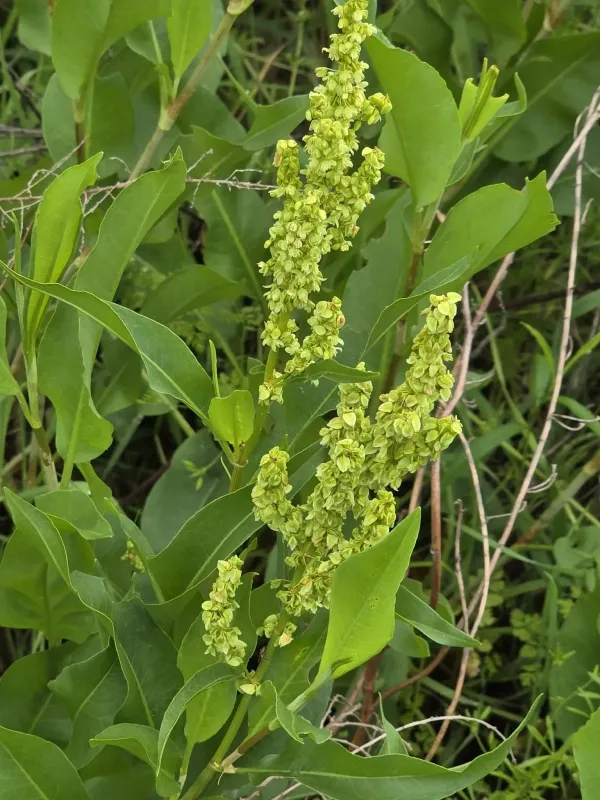
Description
Sowing dates
Tall Dock (Rumex altissimus) belongs to the Polygonaceae family and is a perennial herb with a strong root system. Sowing is recommended in early spring as soon as the soil reaches physical maturity and warms up to 5-8 degrees Celsius.
Late autumn sowing is also permissible, which allows the seeds to undergo natural stratification. This method can result in harvesting green mass 2-3 weeks earlier compared to spring sowing.
For high-quality germination, the soil must be thoroughly loosened and leveled. The optimal planting depth is 1.5–2 centimeters, and if the topsoil is dry, packing is necessary to improve seed-to-soil contact.
The optimal planting scheme involves row spacing of 45 to 60 centimeters to facilitate mechanical soil cultivation. The seeding rate usually ranges from 8 to 12 kilograms per hectare, depending on seed purity.
After seedling emergence, thinning is a mandatory agrotechnical measure if the plant density exceeds the levels required to form a healthy and productive stand.
Growing requirements
This species is characterized by high ecological plasticity, successfully growing on various soil types, including floodplains and loams. It prefers areas with a neutral or slightly acidic soil reaction.
The plant is light-loving but capable of tolerating temporary shading. It is highly responsive to sufficient moisture, as it possesses a high transpiration coefficient during the phase of intensive stem growth.
The crop demonstrates exceptional winter hardiness, surviving harsh winters with deep soil freezing. In temperate climates, it is capable of providing early greens immediately after the snow melts.
Tall Dock requires reserves of nutrients, especially nitrogen and potassium, for normal development. Applying organic fertilizers in the fall before deep plowing significantly increases the productivity of this perennial.
An important requirement is the absence of stagnant water; despite its love for moisture, waterlogging can lead to rotting of the rootstocks during the winter-spring period.
Yield
The yield of green mass of Tall Dock directly depends on the level of agronomic management and the frequency of mowing. In favorable years, up to three full cuts can be made per season with regular irrigation.
A biological feature of the species is its intensive accumulation of biomass at the beginning of the growing season. Maximum yields of nutrients are achieved at the budding stage, before the stems begin to harden.
When used for forage, the crop's productivity is measured in centners of dry matter per hectare. Tall Dock is rich in protein, making it a valuable component for improving the quality of early spring feed.
The plant can productively grow in one location for 5-7 years, after which a decrease in yield may occur due to the expansion of the root system and partial thinning of the stand.
To maintain high productivity in subsequent years, it is recommended to apply complex mineral fertilizers after each cycle of green mass harvesting.
Main diseases and pests
Leaf rust is the primary threat to the crop, manifesting as reddish spots and reducing the plant's photosynthetic capacity. High humidity and dense stands contribute to the development of the disease.
Powdery mildew can also affect vegetative parts of the plant, manifesting as a characteristic white coating. Compliance with crop rotation and timely weeding are necessary to control fungal pathogens.
Among pests, dock leaf beetles are the most dangerous, capable of destroying a significant portion of the leaf surface in a short period. Damage caused by larvae makes the produce unsuitable for sale.
Aphids can colonize the underside of leaves, sucking out sap and suppressing overall plant development. In cases of mass outbreaks, authorized insecticides with a short pre-harvest interval are required.
Slugs often damage young seedlings in damp weather. To reduce pest risks, it is important to keep rows clean and cultivate the soil to disrupt the insects' life cycles.
Harvesting
Harvesting begins when the leaf rosette reaches a marketable size, usually 40–50 days after the start of vegetation. Leaves should be juicy and free of coarse fibers.
Cutting is carried out at a height of 3–5 centimeters from the ground, taking care not to damage the central growing point. Damaging the growing point can lead to plant loss.
In industrial-scale farming, harvesting is performed using mowers equipped with pick-up mechanisms, which minimizes losses and mechanical damage to the crop.
Immediately after harvesting, the produce should be cooled, as dock leaves quickly lose moisture and wilt at high temperatures. Timely marketing or processing is key to high-quality raw materials.
The last cut of the season is performed no later than a month before the onset of persistent frosts. This allows plants to accumulate sufficient nutrient reserves in the roots for successful overwintering.