
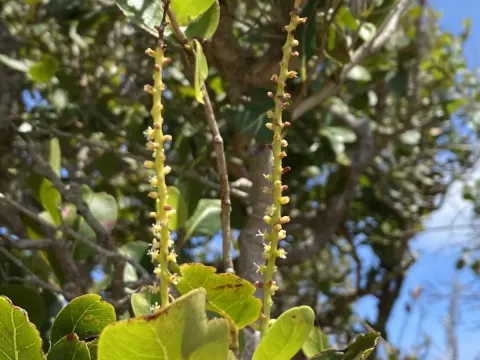
Coccoloba swartzii
Coccoloba swartzii
Sowing seeds of Coccoloba swartzii is typically conducted in controlled greenhouse environments, as the plant is highly sensitive to temperature fluctuations during its early developmental stages. The optimal time for planting is early spring, when increasing daylight hours stimulate germination.
What the section contains
Coccoloba swartzii
Seeds require pre-treatment, such as soaking, to soften the tough outer coat. The substrate must be loose, well-draining, and kept consistently moist throughout the germination period, which may span several months depending on environmental conditions.
Vegetative propagation via cuttings is performed during the active growing season. The use of rooting hormones significantly enhances the success rate of propagation, ensuring the development of a robust root system before the seedlings are transitioned to the field.
Young saplings require a period of gradual hardening off before being planted in their permanent locations. Transplanting should be done using the root-ball method to prevent damage to the delicate root structure, which is essential for the plant's survival.
Planting density in commercial plantations is determined by the intended purpose. Whether for timber or ecological restoration, spacing should be designed to allow for adequate canopy development and proper airflow, typically ranging between four to six meters apart.
Coccoloba swartzii, a member of the Polygonaceae family, is a tropical tree that thrives in fertile, well-draining soils rich in organic matter. It is endemic to regions where consistent warmth and moderate moisture levels are characteristic throughout the year.
The culture has high light requirements, making site selection critical. While juvenile plants may tolerate partial shade, maximum exposure to sunlight is necessary for optimal growth, wood density, and overall metabolic health of mature trees.
A stable, frost-free climate is essential for this species. Even brief exposure to freezing temperatures can cause irreparable damage to the vascular system and buds, making it unsuitable for regions that experience winter dormancy or cold snaps.
Humidity management is crucial for development. In areas with prolonged dry seasons, supplemental irrigation is necessary to prevent leaf drop and ensure steady growth. The tree performs best in environments that mimic its natural tropical habitat.
Soil pH should ideally be neutral or slightly acidic. Agronomists must monitor soil nutrient levels to ensure a balanced supply of nitrogen, phosphorus, and potassium, which are vital for the structural development of the tree and its defense mechanisms.
The primary economic use of Coccoloba swartzii is the production of high-quality timber, known for its density and unique aesthetic patterns. The maturation cycle for harvesting is long-term, often requiring several decades of careful forest management.
While the tree produces fruit in the form of small drupes, these are not typically the primary focus of industrial agriculture. However, they are valued in local ecosystems as a food source for wildlife and have historical applications in traditional food preparations.
Yield, in terms of wood volume, is directly proportional to the tree's health and the availability of light. Open-grown specimens with access to full sunlight typically show faster growth rates compared to those in dense plantations or competitive forest settings.
Regular silvicultural practices, including pruning and selective thinning, are essential to maximize yield. These practices redirect the plant's energy toward developing a straight and sturdy trunk, which is the most valuable part of the tree for industrial timber.
Annual yield statistics are heavily influenced by local rainfall patterns and the intensity of solar radiation. Effective plantation management accounts for these variables to optimize the harvest cycle and ensure the long-term sustainability of the timber resource.
Pathogenic fungi are among the most significant threats to Coccoloba swartzii, particularly in humid conditions. These pathogens cause leaf spotting, which reduces the photosynthetic area and can lead to weakened growth if left untreated.
Pests, such as scales and aphids, frequently infest young shoots and buds. By feeding on plant sap, these insects weaken the saplings and can serve as vectors for secondary bacterial or fungal infections, particularly on stressed specimens.
Root rot caused by stagnant water or soil-borne pathogens remains a major challenge. Maintaining proper drainage and avoiding waterlogged conditions are the most effective preventative measures against these common agricultural complications.
Defoliating insects can occasionally cause substantial leaf loss. While mature trees generally possess enough resilience to recover, frequent or severe infestations can impact annual growth increments and the overall vigor of the plantation.
An integrated pest management strategy is highly recommended. This includes regular field monitoring, the promotion of natural predator populations, and the targeted, cautious use of chemical controls only when the economic damage threshold is reached.