
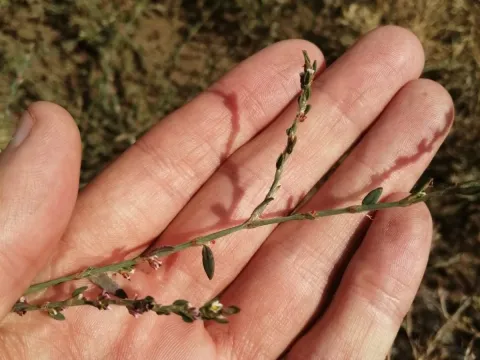
Polygonum patulum
Polygonum patulum
Polygonum patulum, commonly known as a type of knotweed, belongs to the Polygonaceae family and is recognized as an annual herbaceous plant with potential agricultural utility.
What the section contains
Polygonum patulum
The optimal sowing time for this crop is early spring, once the soil temperature consistently reaches about 8 to 10 degrees Celsius to ensure robust germination.
Seeds should be planted at a shallow depth of 2 to 3 centimeters, providing enough coverage to retain moisture while allowing the seedling to reach the surface quickly.
The spacing between rows should be maintained between 15 and 30 centimeters to ensure adequate space for development and to facilitate easy weeding during the early stages.
By sowing early, the crop can successfully utilize residual winter moisture, establishing a strong root system before the onset of the typical summer dry spells.
The plant demonstrates significant flexibility regarding soil types, thriving best in well-drained, sandy loams that provide adequate aeration for the root system.
Polygonum patulum is a sun-loving species; therefore, high-yield results are achieved when planted in open, sunny fields free from competition with taller neighboring crops.
While it is relatively drought-tolerant, consistent moisture during the vegetative growth phase is key to maximizing the total biomass production of the plant.
The soil pH should ideally remain within the neutral range, between 6.0 and 7.5, which helps optimize the availability of essential nutrients in the soil solution.
Poorly drained, waterlogged soils should be avoided, as the roots are sensitive to anaerobic conditions, which can lead to stunted growth or plant mortality.
The biomass yield of Polygonum patulum is highly dependent on fertility levels and the effectiveness of weed management during the critical initial growth phase.
Under favorable farming practices, the crop can provide high yields of green matter suitable for animal feed, typically reaching significant tonnage per hectare.
The plant possesses strong regenerative capabilities, which often allows for multiple cuttings during a single growing season if irrigation is provided regularly.
The nutritional profile of the harvested biomass is most beneficial when the crop is harvested during the flowering stage, containing optimal protein content.
Seed production is equally efficient, as the plant naturally produces large quantities of small fruits, ensuring easy multiplication and self-seeding on the field.
The crop may be susceptible to fungal infections such as powdery mildew, especially in environments with high humidity levels and poor air circulation between rows.
Pests like aphids can occasionally pose a threat by colonizing the tender parts of the plant, potentially weakening it during the early stages of rapid development.
Weed pressure remains the most significant challenge, as the plant grows relatively slowly during the first few weeks after emergence, requiring mechanical intervention.
Crop rotation serves as a fundamental strategy to mitigate the buildup of soil-borne pathogens that could otherwise compromise the longevity and health of the crop.
Regular field scouting is highly recommended to detect any sign of pest or disease early, allowing for targeted management without the need for intensive chemical use.
The harvest for green biomass should be carried out during the peak flowering phase to ensure the maximum concentration of nutrients for livestock feeding purposes.
Seed harvesting should occur when the fruits begin to turn brown, ensuring the operation is completed before the natural dehiscence leads to excessive seed loss.
For efficient harvesting, standard forage machinery can be used, ensuring that the biomass is properly conditioned or dried if it is intended for long-term hay storage.
Post-harvest processing involves cleaning the seeds of any debris and drying them to a moisture content of roughly 12–14 percent to prevent spoilage during storage.
Proper storage conditions, such as dry and well-ventilated granaries, are essential for maintaining the viability of the seeds for future planting cycles.