
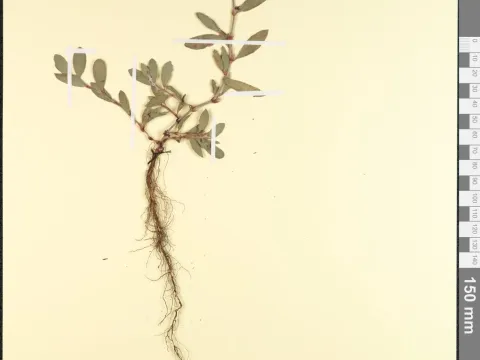
Polygonum mesembricum
Polygonum mesembricum
Polygonum mesembricum is a species belonging to the Polygonaceae family. This plant is known for its remarkable adaptation to harsh environments, particularly rocky and saline soils, where its specialized physiology allows it to thrive under significant abiotic stress conditions.
What the section contains
Polygonum mesembricum
The species prefers well-drained, porous soils with a neutral to alkaline pH. Its root system is deeply penetrating, which enables the plant to access moisture in dry substrates. This characteristic makes it highly suitable for cultivating in arid regions where traditional crops might fail.
Botanically, this perennial plant features semi-succulent foliage, which is an evolutionary response to water scarcity. These structures act as water reservoirs, helping the plant maintain metabolic functions during prolonged heatwaves and intense solar radiation.
Climate-wise, the plant requires high light intensity. It is extremely sensitive to shade, which inhibits its development and reduces biomass production. Therefore, field selection should focus on open, sun-exposed areas with low risk of water stagnation.
Soil preparation should involve creating a loose, well-aerated seedbed. While the plant is not highly demanding in terms of nutrient content, initial soil enrichment with phosphorus and potassium can significantly boost its establishment rate and overall health.
The optimal time for sowing Polygonum mesembricum is early spring. During this period, the moisture levels in the soil are typically sufficient to facilitate germination, allowing the young seedlings to establish before the onset of extreme summer heat.
Seeds should be planted at a shallow depth of approximately 1 to 2 centimeters. Because the seeds are relatively small, precise seeding equipment is recommended to ensure uniform distribution and avoid burying them too deep, which would prevent emergence.
Weed management during the sowing phase is critical. In the first few months of growth, the plant is relatively slow-growing and can be easily outcompeted by aggressive weeds. Clean cultivation and timely inter-row management are essential for a successful stand.
Seed spacing depends on the primary goal of cultivation. For forage production or large-scale land restoration, maintaining rows at a distance of 45–50 centimeters provides enough room for individual plants to develop while ensuring optimal land coverage.
Post-sowing care includes monitoring moisture levels in the topsoil. While the mature plant is highly drought-tolerant, young seedlings require consistent, though not excessive, moisture to ensure root development and survival through the first dry spell.
The yield of Polygonum mesembricum reaches its commercial potential after the third year of cultivation. In the initial years, resources are directed toward establishing the complex root system, which later supports substantial above-ground biomass growth.
Biomass production is highly dependent on light availability and the length of the growing season. In optimal conditions, multiple harvests per year are possible, provided the management practices support the plant’s rapid regrowth after each cutting.
Beyond its use as potential forage, this plant is increasingly recognized for its soil conservation properties. It is an excellent candidate for stabilizing sandy or rocky slopes, preventing erosion, and improving soil structure in degraded ecosystems.
Factors limiting yield usually involve competitive pressure from invasive weeds and extreme soil compaction. Regular cultivation and adequate mineral supplementation during the active growth phase are necessary to maintain high production levels over several years.
It is important to manage harvests to ensure the longevity of the perennial stand. Avoiding over-harvesting and allowing the plant to store energy in its root system before winter is a key strategy for maintaining consistent yields over long periods.
Fungal pathogens represent the primary threat to Polygonum mesembricum, especially in areas with poor ventilation or high humidity levels. Leaf spots and root rot can occur if soil remains waterlogged, severely impacting plant health and biomass quality.
Pests, particularly aphids, can cause significant damage to the succulent shoots during the peak growing season. Their sap-feeding activity can stunt plant development and facilitate the spread of secondary viral infections, requiring vigilant monitoring.
Integrated pest management (IPM) is the best approach for protecting this crop. This involves regular scouting for early signs of infestation and using selective biological or chemical controls to protect the plant while preserving local beneficial insect populations.
Preventative cultural practices are the foundation of disease management. Proper site selection, avoiding over-irrigation, and maintaining healthy soil aeration are the most effective ways to prevent pathogen outbreaks before they necessitate chemical intervention.
Because the species is highly adapted to its natural environment, it generally possesses strong inherent defenses. Problems usually arise when the plant is grown under conditions that deviate significantly from its preferred dry, sunny, and well-aerated habitat.
The harvest phase should be timed to coincide with the plant’s full bloom, which is when the nutrient content of the biomass is at its peak. Harvesting at this stage ensures the highest possible value for forage or processing purposes.
Mechanical harvesting using rotary mowers is the standard practice. It is vital to set the cutting height high enough—typically about 5 to 7 centimeters—to leave enough vegetative tissue for rapid regeneration after the harvest.
Drying the harvested material requires specific attention due to the high moisture content of the succulent foliage. Efficient ventilation is needed to prevent spoilage and ensure the final product retains its nutritional value and does not develop mold.
For seed production, the harvest should be carried out just as the inflorescences turn brown. Harvesting during the cooler morning hours can help prevent seed shattering, which is a common challenge due to the plant’s natural dispersal mechanisms.
Proper storage is essential to maintain the quality of the harvested product. Store the dry biomass in well-ventilated, moisture-controlled warehouses to prevent degradation and ensure that the crop remains suitable for animal feed or other commercial uses.