
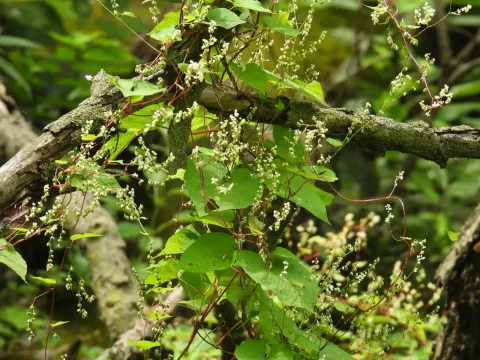
Knotweed
Parogonum
The sowing schedule for knotweed varies depending on the specific species, but agricultural practice typically favors early spring planting once the soil temperature reaches 5–8 degrees Celsius.
What the section contains
Knotweed
For perennial species such as giant knotweed, autumn planting using rhizomes is feasible, allowing the crop to establish a strong root system before the onset of winter dormancy.
When sowing seeds, it is critical to maintain a planting depth of 1–2 cm, as small seeds require consistent contact with moist soil to ensure uniform germination across the field.
Late summer planting should be avoided, as young seedlings may not harden off sufficiently before frost, leading to high mortality rates during the winter season.
Crop rotation plans must account for the invasive nature of this plant, as knotweed often spreads aggressively, necessitating isolated planting areas to avoid contaminating adjacent fields.
Knotweed belongs to the Polygonaceae family and is recognized as a hardy crop that exhibits high ecological adaptability across various temperate climate zones.
For optimal growth, the plants prefer well-drained loamy or sandy soils with a neutral to slightly acidic pH, which should be rich in organic matter to support biomass production.
Although the culture possesses high frost resistance, it requires regular irrigation during prolonged droughts to maintain the high biomass yields required for agricultural profitability.
Knotweed generally thrives in full sunlight, though some species demonstrate an ability to withstand partial shading without a significant decline in overall productivity.
The plant is characterized by rapid development of green mass, which necessitates adequate nitrogen fertilization during the peak growth phase of the main stems.
The yield of green biomass for forage knotweed can reach 50–80 tons per hectare under intensive management practices and consistent moisture availability.
Agricultural use includes the production of silage, which is highly nutritious for livestock, provided the harvest is performed before the onset of the flowering stage.
For medicinal purposes, the harvest of roots and aerial parts is timed to capture the maximum concentration of bioactive compounds, which significantly impacts the quality of the raw material.
Yield stability is largely dependent on the frequency of mowing; with proper management, the plant recovers quickly, allowing for multiple harvests within a single growing season.
Industrial processing requires strict control over crop purity, as the presence of weeds within the harvested material significantly degrades the quality of the final processed product.
Common plant diseases include powdery mildew and various rust fungi, which are particularly prevalent in overcrowded plantings with poor air circulation.
Key pests include aphids and spider mites, which feed on the sap of tender leaves, potentially stunting growth and reducing the overall yield of the crop.
Effective disease management involves the prompt removal of infected plant material and the application of fungicides during periods of high humidity when fungal spread is likely.
Regular monitoring of pest populations throughout the growing season is essential, with careful attention paid to the underside of leaves where infestations typically begin.
- Thinning of plantings to improve aeration and reduce moisture buildup.
- Adherence to strict quarantine regulations for all seed and plant materials.
- Utilization of biological control agents during the harvest cycle of medicinal crops.
Harvesting for forage purposes is ideally conducted during the budding phase, when the plant contains the highest concentration of essential nutrients and is most digestible for livestock.
For medicinal raw materials, the aerial parts are gathered during the flowering stage, with shoots cut 10–15 cm above ground level to stimulate subsequent vegetative regrowth.
Rhizomes are harvested in late autumn after the aerial parts have died back, requiring thorough washing to remove soil residues before drying in controlled industrial chambers.
Drying temperatures must be maintained below 50–60 degrees Celsius to preserve the structural integrity of the bioactive components and prevent the development of spoilage molds.
Mechanical harvesting is typically performed using forage harvesters, which allows for efficient processing of large volumes of biomass on a commercial scale.