
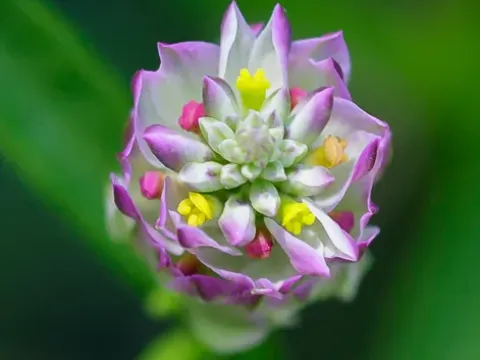
Blood Milkwort
Polygala sanguinea
Blood Milkwort (Polygala sanguinea) is a member of the Polygalaceae family, recognized for its distinctive clover-like flowering spikes. This species is native to North America, typically found in moist meadows, open woods, and sandy prairies.
What the section contains
Blood Milkwort
The plant grows as an annual, reaching a height of approximately 10 to 30 centimeters. It features slender, alternate leaves and small, reddish-purple or greenish-white flowers that appear during the mid-to-late summer months.
Cultivation requires sites with full sunlight and consistently moist, slightly acidic soil conditions. It does not perform well in arid environments or heavy, alkaline clays, which can inhibit its natural growth cycle and reduce flower density.
Agricultural management focuses on maintaining soil moisture levels and ensuring that the competing weeds are managed during the early stages of development. The plant is relatively low-maintenance once established, provided the environmental conditions match its native habitat requirements.
The plant is primarily utilized for landscape restoration and as a support species in pollinator-friendly garden projects. Its ability to thrive in poor but moist soils makes it an interesting candidate for ecological landscape design and biodiversity conservation.
Common threats to the crop include root rot pathogens, which are typically triggered by poor drainage and waterlogging. Ensuring a well-structured soil profile is the most effective preventative measure against these fungal issues.
Pest pressure is usually limited to common meadow insects such as aphids, which can infest the succulent flower stalks. Integrated pest management techniques, such as encouraging natural predators, are recommended over chemical interventions to maintain soil health.