
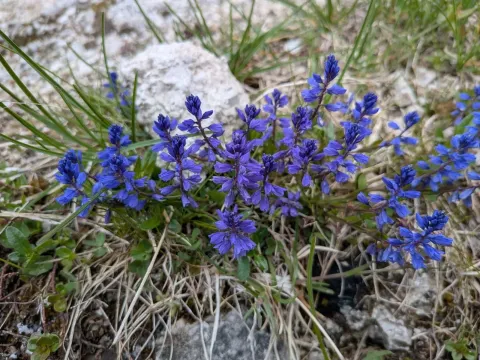
Bitter milkwort
Polygala amara
Bitter milkwort (Polygala amara) is a herbaceous perennial belonging to the Polygalaceae family. It is native to various regions of Europe, often found in damp meadows and limestone-rich soils.
What the section contains
Bitter milkwort
The plant requires consistently moist but well-drained soil for optimal growth. It is highly sensitive to drought conditions, necessitating irrigation management in agricultural settings.
Nutrient-rich soils with a neutral or slightly alkaline pH are preferred. Providing adequate organic matter helps in maintaining soil structure and water retention capacity required by the plant.
Climate-wise, Polygala amara prefers temperate regions with moderate sunlight. It thrives best in partial shade, as excessive direct sunlight can cause leaf chlorosis and dehydration.
Effective agricultural management includes careful spacing between plants. Dense cultivation reduces airflow, which may increase the humidity around the foliage and affect plant health.
Root rot is the most significant threat to Bitter milkwort crops, typically triggered by waterlogged soil conditions. Proper drainage infrastructure is crucial to minimize losses.
Fungal diseases like powdery mildew can spread rapidly in poorly ventilated plots. Farmers must monitor humidity levels to prevent the development of these pathogens.
Insects such as leaf beetles and certain larvae species can cause significant damage to foliage. Integrated pest management (IPM) practices are recommended to keep damage below economic thresholds.
Weed competition is particularly challenging for this crop during the establishment phase. Regular mechanical weeding is necessary to ensure the plants have enough resources to grow.
Prevention of soil-borne diseases involves crop rotation and the use of healthy, disease-free starting material during the planting season.
Harvesting is usually carried out during the peak flowering stage to ensure the highest yield of active pharmacological compounds, specifically saponins.
The aerial parts are harvested carefully using mechanical cutters. It is essential to ensure that the cutting height does not damage the crown of the plant to support regrowth.
Post-harvest handling must be swift. The cut plant material should be moved to a clean, shaded area to prevent heating and degradation of active chemical components.
Drying is a critical step; it must occur in a well-ventilated space at temperatures not exceeding 45 degrees Celsius to maintain the quality of the raw material.
Once dried, the harvest should be stored in moisture-proof containers in a cool, dark location to preserve its medicinal properties for as long as possible.