
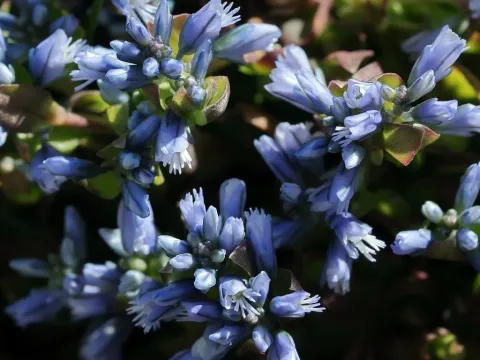
Alpine Milkwort
Polygala alpina
Alpine Milkwort (Polygala alpina) is a perennial herbaceous plant belonging to the Polygalaceae family. Native to the mountainous regions of Eurasia, it is specifically adapted to the harsh conditions of high-altitude alpine and subalpine zones, thriving on rocky slopes and nutrient-poor soils.
What the section contains
Alpine Milkwort
The botanical structure of the plant features a robust root system and small, dense leaves that minimize water loss in high-wind, low-temperature environments. In an agricultural setting, the plant requires excellent drainage, as it is highly susceptible to root rot in waterlogged or heavy clay-based substrates.
Climatic requirements for successful cultivation include high solar exposure and well-ventilated areas. The plant benefits from the cool nights typical of its native mountain habitat, which helps regulate its metabolic processes and encourages the accumulation of phytochemical compounds like saponins.
Agricultural management is relatively low-intensity, focusing on maintaining soil porosity and controlling invasive weeds that may compete for space. Regular weeding and careful watering are the most important practices during the first year of growth before the plant fully establishes its perennial rootstock.
In terms of practical application, the plant is primarily cultivated for its pharmacological potential in respiratory medicine. Furthermore, it serves as an excellent ornamental species for alpine gardens, providing both aesthetic value and hardiness in climates that prove challenging for more common horticultural crops.
Common threats to the crop include various forms of fungal root rot caused by poor soil drainage and stagnant moisture. Ensuring a slope or raised bed for planting is the most effective preventative measure against these pathogen-induced issues.
Pest pressures are generally low due to the plant's chemical defenses, but aphids and spider mites can occasionally affect the tender foliage during dry periods. Integrated pest management, focusing on early detection and manual control, is usually sufficient to maintain a healthy crop without harsh chemicals.