
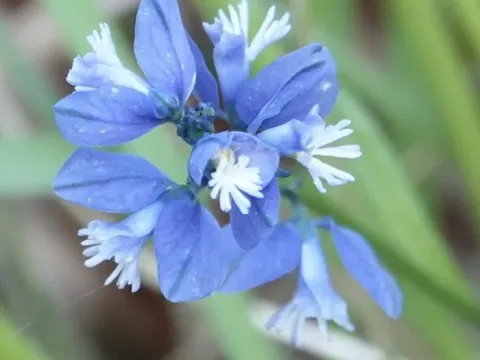
Chalk milkwort
Polygala calcarea
Chalk milkwort is a perennial herbaceous plant, meaning its propagation is typically achieved through seed sowing in late autumn or spring after a period of stratification. Early spring is considered the optimal window for establishing new plantations.
What the section contains
Chalk milkwort
To ensure a high germination rate, seeds require preparatory treatments that mimic natural wintering conditions. The sowing depth should be maintained at 0.5 to 1 centimeter to allow the small seeds to sprout successfully.
Seeding density is calculated based on the intended use, whether for medicinal extract production or ornamental purposes. Proper spacing between rows is essential to facilitate manual or mechanical field maintenance.
During the initial growth stages, seedlings require protection from weed competition, which can suppress the development of this relatively slow-growing plant. Mulching is highly recommended to maintain consistent soil moisture levels.
Once the plant establishes a robust root system, it becomes more competitive against weeds and requires significantly less attention from the agronomist in subsequent years of growth.
As the name suggests, chalk milkwort prefers soils with a high carbonate content, exhibiting an alkaline or neutral pH level. Avoiding acidic soils is the most critical factor for the successful cultivation of this species.
The plant exhibits significant drought tolerance, as it naturally inhabits calcareous slopes and dry meadows. It thrives in well-lit environments and does not tolerate excessive shading.
The optimal climate for this species includes temperate conditions with mild winters. While the plant can withstand low temperatures, excessive winter soil moisture can lead to root rot and plant mortality.
Proper drainage is essential for healthy development. Heavy clay soils that tend to become waterlogged are unsuitable for milkwort and should be improved or avoided to prevent disease outbreaks.
Regular cultivation of inter-row spaces is recommended to improve soil aeration, which is necessary for the optimal functioning of the root system and associated soil microbiota.
Chalk milkwort is generally resistant to many typical agricultural pests due to its specific chemical composition, which includes saponins that act as a natural deterrent.
The primary threat to plantations is fungal infections resulting from poor agricultural practices. High humidity and poor air circulation are the main precursors to root rot and mold infections.
Potential pests include aphids and spider mites, which may attack the aerial parts of the plant during prolonged dry spells when the plant's natural immune system is compromised.
Integrated pest management, including biological controls, is recommended to manage pest populations while adhering to safety standards for pharmaceutical-grade crop production.
Disease prevention relies heavily on crop rotation, the prompt removal of plant debris, and maintaining the correct soil pH, which collectively strengthen the plant against various pathogens.
For medicinal purposes, the harvest of chalk milkwort is conducted during the peak flowering stage when the concentration of bioactive compounds is at its highest point.
Harvesting should be performed using sharp tools, ensuring the crown and roots remain undamaged to allow the perennial plant to regenerate for the following growing season.
The collected biomass must be dried rapidly in a well-ventilated, shaded area. Excessive heat during the drying process must be avoided, as it can significantly degrade the pharmacological quality of the raw material.
In large-scale operations, mechanical harvesting is possible, though it requires specialized low-profile equipment to minimize losses and ensure the purity of the harvested product.
Dried raw material should be stored in cool, dark, and dry conditions using containers that prevent moisture absorption and pest infestation, ensuring the stability of the active ingredients.