
Spartina bakeri
Spartina bakeri
Description
Growing requirements
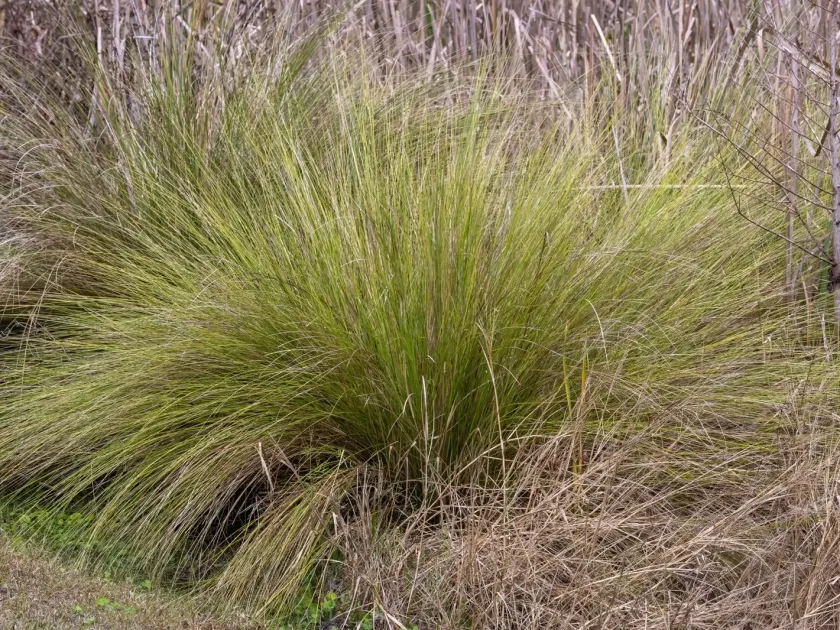
Spartina bakeri, commonly known as sand cordgrass, belongs to the Poaceae family. It is a robust, perennial bunchgrass characterized by its dense, upright, and arching foliage which creates an attractive fountain-like appearance in the landscape.
Native to the southeastern United States, particularly Florida, this species is well-adapted to coastal environments and wet prairies. It naturally thrives in areas where it can tolerate both periods of drought and occasional saturation, making it a highly adaptable plant.
When cultivated, Spartina bakeri requires full sun exposure to maintain its vigor and structural integrity. It is notably versatile regarding soil types, performing well in sandy, loamy, and even slightly saline soils, which is rare for many ornamental grasses.
The plant is extensively used in landscape architecture as a specimen plant or in mass plantings. Its deep root system makes it an excellent choice for stabilizing shorelines, slopes, and other areas prone to erosion, providing both aesthetic value and ecological benefits.
Maintenance requirements for sand cordgrass are minimal once the plant is established. Annual pruning of dead or old foliage in late winter or early spring is recommended to encourage fresh, healthy growth for the upcoming season.
Main diseases and pests
While Spartina bakeri is remarkably hardy, it can be susceptible to fungal issues such as rust or leaf spot if planted in areas with poor air circulation and excessive humidity. Maintaining proper spacing is essential to mitigate these risks.
In terms of pests, it is occasionally targeted by aphids or grass-feeding caterpillars. However, such infestations are rarely fatal and can often be managed through natural biological controls or targeted horticultural soap applications.
Competition from invasive plant species can be a challenge during the initial planting phase. Ensuring the site is cleared of aggressive weeds before transplanting will significantly enhance the establishment rate of the sand cordgrass.
Environmental stress, such as extreme freezing temperatures, can cause top-dieback. While the roots typically survive, the plant may require a longer period to recover and reach its full size during the following spring.
Over-fertilization should be avoided, as it can lead to weak, elongated growth that is more prone to lodging and pest attacks. Providing organic compost during the initial growth phase is usually sufficient for optimal health.