
Prairie cordgrass
Spartina pectinata
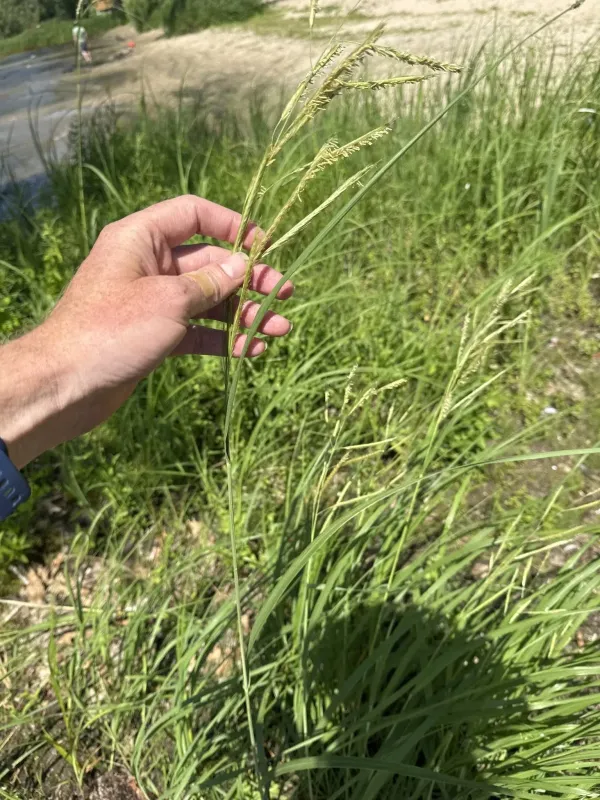
Description
Sowing dates
Prairie cordgrass (Spartina pectinata) is a robust, perennial rhizomatous grass belonging to the Poaceae family. It is well-known for its extensive underground root system that allows it to establish dense stands in challenging environments.
Propagation is primarily achieved through rhizome division rather than seeds, as seed germination can be erratic and slow. Planting typically occurs in early spring once the ground has thawed, allowing the rhizomes time to develop before the heat of summer.
When establishing a new stand, rhizomes should be planted at a depth of 5 to 10 centimeters. Ensuring adequate soil-to-rhizome contact is crucial for successful establishment and future expansion of the colony.
During the first growing season, supplemental irrigation may be necessary if precipitation is insufficient. Weed management is also vital during this stage until the grass forms a dense, competitive canopy that suppresses other vegetation.
The spacing between rows can range from 30 to 60 centimeters, depending on the intended application, such as erosion control on embankments or mass biomass production for energy usage.
Growing requirements
Prairie cordgrass is highly adaptable, native to wetlands, wet prairies, and riverbanks across North America. It thrives in locations where other crops struggle, showing remarkable tolerance to waterlogged soils and flooding.
The plant demonstrates excellent resilience to various soil types, including sandy, loamy, and heavy clay soils. It is particularly valued for its ability to grow in saline or slightly alkaline conditions, where it often outcompetes local weeds.
Sunlight is a key requirement for optimal biomass production. While it can survive in partial shade, the best growth rates are observed in full sun exposures where the soil moisture remains consistently high.
Climate-wise, it is cold-hardy and can withstand harsh winters without special protection. Its deep root system protects the crown from freezing, enabling it to re-emerge vigorously every spring in northern climates.
Soil nutrient requirements are generally low, as the grass is efficient at cycling nutrients. In intensive cultivation systems, balanced nitrogen applications may boost yield, but the plant remains productive even under marginal fertility conditions.
Yield
The primary economic use for Spartina pectinata is as a biomass feedstock. Its high lignocellulosic content makes it an ideal candidate for bioenergy applications, including combustion, pelletizing, and bioethanol production.
Beyond energy, the plant plays a significant role in environmental conservation. Its aggressive root structure makes it one of the best choices for stabilizing shorelines, road embankments, and areas prone to severe soil erosion.
It is also utilized in phytoremediation projects, where it helps rehabilitate degraded landscapes by absorbing contaminants, including heavy metals, from the soil profile during its growth cycle.
While not a primary forage crop due to the coarse texture of its leaves, it may provide limited emergency grazing or can be harvested for fiber production, depending on the maturity of the stalks at the time of harvest.
Yields per hectare are highly competitive with other bioenergy crops, especially when grown on reclaimed lands that are otherwise considered unsuitable for traditional agricultural production.
Main diseases and pests
Prairie cordgrass possesses a strong natural defense system, making it resistant to most common agricultural pests and diseases. This hardiness significantly reduces the need for chemical intervention in commercial fields.
In extremely humid conditions with poor air circulation, some minor fungal infections such as rust may occur. Proper field management, including spacing and removal of old growth, typically keeps these issues at manageable levels.
Few insects are specialized enough to cause economic damage to this species. Most generalist pests find the silica-rich, coarse foliage unpalatable, which acts as a deterrent against widespread defoliation.
Weed encroachment is the most significant threat during the establishment phase. Once the stand is fully matured, however, the plant’s dense root network and rapid growth rate effectively create a monoculture that resists invasive species.
No major viral threats are known to limit the widespread cultivation of this species, making it a low-risk option for growers looking to diversify their agricultural output on wet or marginal lands.
Harvesting
Harvesting is typically carried out once a year in late autumn or early winter, after the plant has reached senescence. This timing is essential for maximizing dry matter content, which is critical for efficient processing.
Standard forage harvesting equipment, such as disc mowers and hay balers, is suitable for handling the stalks. The cutting height should be adjusted to ensure that the rhizomes remain intact for the next growing season.
The harvested biomass should be dried or baled efficiently to prevent moisture-related quality loss. Dry storage is essential to prevent mold growth and the degradation of the fibers during the winter months.
Operations should be timed to avoid significant soil compaction, particularly if the field remains damp. Harvesting after the first hard frost often simplifies machinery movement across the fields.
Proper logistical planning ensures that the biomass is stored in well-ventilated areas, maintaining its calorific value until it can be transported to the processing or energy conversion facility.