
Spanish alkaligrass
Puccinellia hispanica
Description
Sowing dates
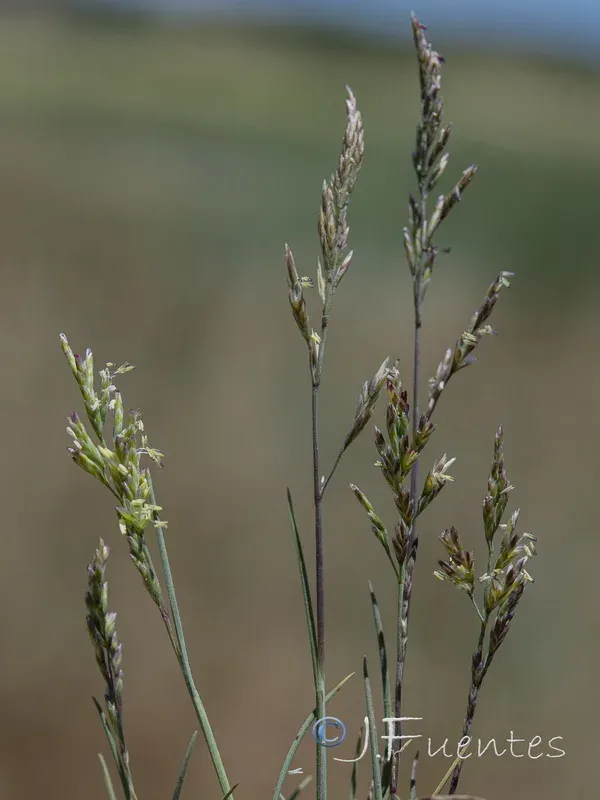
Spanish alkaligrass (Puccinellia hispanica) is a perennial grass belonging to the Poaceae family. This species is specifically adapted to challenging environments, making it an excellent candidate for agricultural use in areas characterized by high salinity levels.
The optimal sowing time is during early spring when soil moisture is at its peak. This timing ensures that the seeds have sufficient water to germinate and develop a robust root system before the onset of potential summer drought conditions.
Due to the small size of the seeds, they should be sown at a shallow depth of 1-1.5 cm. Proper soil contact is essential for germination, which is why rolling the field after sowing is a standard practice to improve the survival rate of the young seedlings.
Seeding rates depend on the purity and germination potential of the seed batch. Typically, drilling or broadcasting methods are used to create a uniform stand, which helps in suppressing weed competition during the initial establishment phase of the crop.
Prior to sowing, it is recommended to test the seeds for vigor and purity. Ensuring that the field is free from existing dense weed cover before planting is crucial, as this grass species tends to establish slowly in its early stages of growth.
Growing requirements
Spanish alkaligrass is a specialized halophyte, highly tolerant of salt concentrations that would typically inhibit the growth of most conventional crops. Its biological mechanisms allow it to maintain turgor pressure even in saline conditions.
The crop thrives in sunny, open locations and is highly adaptable to various climatic conditions, including regions with significant temperature fluctuations. It shows high resilience to both waterlogged conditions and periods of prolonged soil drying.
Soil requirements are relatively flexible, provided there is adequate aeration. While it prefers medium-textured soils, it can successfully inhabit heavy or clay-rich environments often found in saline flats, provided that extreme stagnant water is avoided.
Agrotechnical management includes controlling competitive vegetation, especially during the first growing season. Once established, the dense root system of the alkaligrass helps improve soil structure and minimizes further salt crusting.
Regular fertilization is not strictly required but can boost biomass production in degraded soils. The plant is known for its longevity, and with proper management, it can provide stable forage production for several consecutive years.
Yield
Yield capacity is largely determined by the degree of soil salinity and the availability of water during the growing season. In favorable saline environments, it produces a dense, palatable forage crop suitable for livestock grazing.
The primary use of the crop is as a grazing or hay-making resource in areas where traditional grass species fail to thrive. It regrows quickly after grazing, offering multiple harvesting opportunities throughout the growing season.
Nutritional value is generally good, as the plant maintains high mineral and protein content throughout its development phases. Livestock often find this grass more palatable than other halophytic alternatives, which is a major advantage for producers.
Grazing management is vital to maintain the stand's vitality. Overgrazing can weaken the root system and reduce future production, so rotation-based grazing strategies are highly recommended to ensure long-term sustainability of the pasture.
Seed harvesting requires attention to detail, as the plant matures its panicles somewhat unevenly. Using mechanized harvesting equipment during the early morning hours can help reduce seed loss due to shattering.
Main diseases and pests
Spanish alkaligrass is remarkably resistant to many common agricultural pests and diseases, largely due to its evolutionary adaptation to harsh saline environments. This natural resilience makes it a low-input crop in terms of chemical protection.
Fungal diseases, such as rusts, may occasionally appear during periods of high humidity and stagnant air. Good stand management, including ensuring proper plant spacing and airflow, is the best prevention against these issues.
Insects like aphids or grass-eating flies can sometimes be problematic in the seedling stage. Monitoring the fields during the early development weeks allows for the timely application of control measures if the damage reaches economic thresholds.
Weed infestation is the primary threat during the establishment year. Maintaining a clean seedbed and using proper cultural practices like light harrowing can significantly reduce the pressure from competing plant species.
Overall plant health is highly dependent on avoiding extreme soil saturation. Ensuring adequate surface drainage helps prevent the development of root rots and other soil-borne diseases that can negatively impact plant density.
Harvesting
Harvesting for hay should occur at the flowering stage to maximize both the quantity and nutritional quality of the forage. Cutting at an appropriate height of 5-7 cm is essential to allow the plant to regenerate effectively.
For haymaking, the cut biomass should be tedded regularly to ensure uniform moisture reduction. The target moisture content of 15-18% is necessary to store the hay without risk of molding or nutritional degradation.
Direct combining is the most efficient method for harvesting seeds on a large scale. Timing is critical to prevent yield losses from seed shattering, which often occurs rapidly once the seeds reach full maturity.
Post-harvest cleaning is necessary to remove impurities and ensure the seeds are dry enough for long-term storage. High-quality storage conditions, including cool and dry environments, are vital to maintain seed vigor until the next season.
Tracking yield performance by plot and by year enables producers to make data-driven decisions regarding soil amendments or overseeding requirements. Consistent harvesting practices are the key to maximizing the lifespan of a Spanish alkaligrass pasture.