
Common cordgrass
Spartina anglica
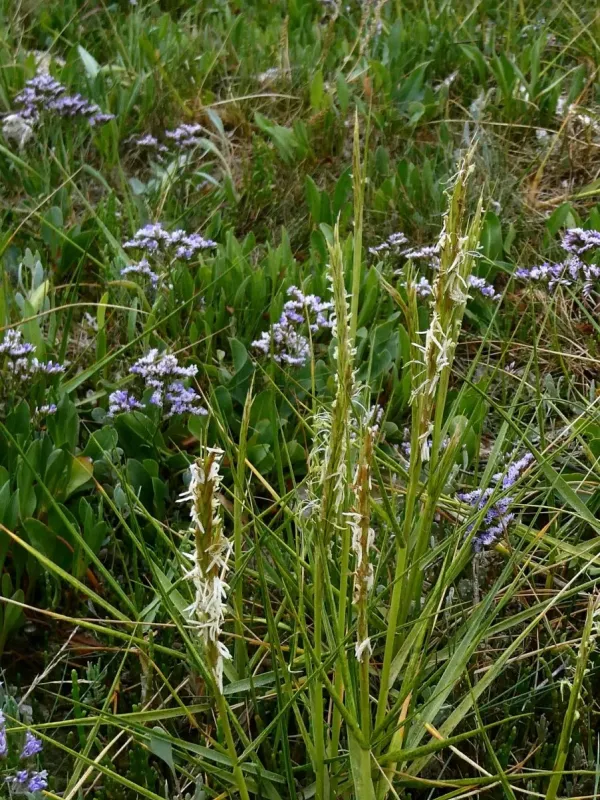
Description
Growing requirements
Common cordgrass (Spartina anglica) is a perennial grass species belonging to the Poaceae family. It is a highly robust plant, originally derived from natural hybridization, which has successfully colonized coastal intertidal zones globally.
This species is a true halophyte, characterized by its ability to thrive in environments with high salinity levels. Its physiological adaptations allow it to withstand regular tidal flooding, which typically kills most conventional agricultural crops.
Botanically, Spartina anglica features a vigorous rhizomatous root system that binds loose sediment, effectively acting as an ecological anchor. Its stems are stiff and upright, supporting narrow, tough leaves that are well-adapted to high-wind environments.
The plant thrives in intertidal mudflats and salt marshes, where nutrient-rich silt provides the necessary conditions for rapid growth. It prefers temperate climates but is remarkably resilient to varying temperature ranges found along coastal belts.
Cultivation requirements for this species are minimal because it acts as a pioneer plant. It aggressively colonizes bare, muddy substrates without the need for traditional tilling, fertilization, or irrigation practices employed in standard farming.
Harvesting
The primary agricultural and environmental use of common cordgrass is coastal protection and land reclamation. By slowing water movement, the plant facilitates the accretion of sediment, protecting shorelines from erosive forces.
In certain contexts, the grass has been explored as a source of biomass for bioenergy production. Its high dry matter yield per hectare on marginal, saline land makes it a candidate for sustainable energy research.
Historically, the plant was sometimes utilized as fodder, though it is not a primary forage crop due to its high salt content and tough, fibrous texture. Careful processing is required if it is to be included in livestock rations.
Harvesting Spartina anglica is technically challenging due to its habitat. It is usually performed in tidal flats during low tide periods using specialized low-impact machinery to prevent damage to the delicate coastal soil structure.
Beyond its physical uses, common cordgrass is a powerful tool in phytoremediation projects. It effectively sequesters pollutants from salt-affected soils, helping to restore contaminated coastal environments over time.