
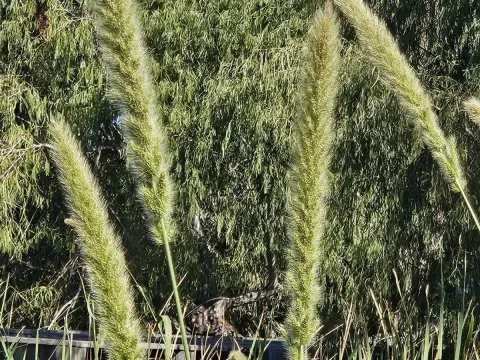
Giant bristlegrass
Setaria magna
Giant bristlegrass is a warm-season annual that thrives in environments where soil temperatures are sufficiently elevated for rapid germination.
What the section contains
Giant bristlegrass
Seeding should occur in late spring once the danger of frost has passed, ensuring the soil has warmed to at least 15 degrees Celsius.
Uniform seed distribution is essential for achieving a dense stand, which suppresses weeds and maximizes the total biomass yield per hectare.
A shallow planting depth of approximately 2-3 cm is recommended to allow the seedlings to emerge quickly and establish a robust root system.
Proper seedbed preparation, involving light harrowing or rolling, ensures excellent soil-to-seed contact, leading to higher emergence rates.
This species belongs to the Poaceae family and is highly adapted to sunny, open environments where it can maximize its photosynthetic efficiency.
It performs best on fertile, well-drained loamy soils but shows remarkable resilience in moist, low-lying areas often found in its natural habitat.
As a warm-season crop, it requires a significant sum of active temperatures throughout the growing season to reach full maturity and peak nutrition.
Adequate nitrogen availability is critical during the vegetative growth phase to support the rapid development of stems and foliage.
While tolerant of various soil conditions, it responds exceptionally well to consistent moisture levels during the peak growth months of summer.
The biomass yield of Setaria magna is highly competitive, especially when managed with appropriate fertilization and adequate irrigation schedules.
Farmers can expect high productivity in terms of green mass, provided the crop is harvested at the optimal physiological stage of development.
The nutritional profile of the harvested fodder is balanced, making it a valuable feed source for livestock when integrated into summer rations.
Consistent management practices, including density control and weed suppression, are key drivers of overall crop yield and economic return.
Multiple cuts are possible in regions with long growing seasons, provided the plants are allowed sufficient recovery time between harvesting events.
Setaria magna is generally hardy, but it remains susceptible to specific cereal pests like aphids and stem-boring insects in some climates.
Fungal diseases, including leaf rusts and various smuts, may occur if humidity levels remain high for extended periods, stressing the plant population.
Integrated pest management strategies should be utilized to monitor for early signs of infection or infestation to protect the integrity of the crop.
Competition from invasive weeds during the seedling stage can significantly reduce the crop's ability to develop into a dense, productive stand.
Crop rotation and proper field sanitation are effective preventative measures against the buildup of host-specific pathogens within the soil profile.
Timing the harvest is critical; for high-quality silage, the crop should be mowed when the inflorescences are just beginning to emerge.
For dry hay production, cutting during a period of sustained clear weather is essential to minimize drying time and prevent nutrient degradation.
The use of advanced harvesting equipment helps to preserve the structural integrity of the plant, ensuring high digestibility for the end consumer.
Proper storage of the harvested material is necessary to maintain quality and prevent the development of mold or excessive heating in the bales.
Post-harvest management involves clearing the stubble and preparing the field for subsequent crops or overseeding to maintain soil health.