
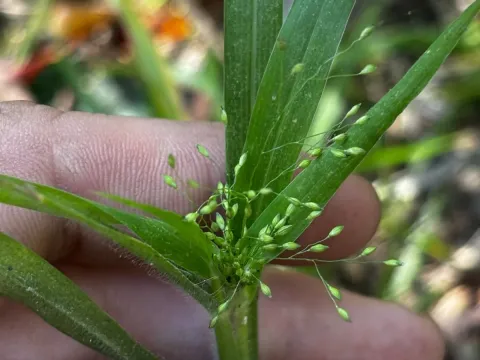
Gattinger's panicgrass
Panicum gattingeri
Gattinger's panicgrass is a warm-season annual that requires well-warmed soil to achieve rapid germination and establishment.
What the section contains
Gattinger's panicgrass
The optimal planting time occurs in late spring, once the danger of late frost has passed and soil temperatures consistently stay above 15 degrees Celsius.
Preparation of a fine seedbed is critical for this species, as it ensures proper seed-to-soil contact and consistent moisture availability for the emerging seedlings.
Seeding depth is generally kept shallow, usually between 1 and 3 centimeters, to prevent exhaustion of energy reserves before the seedling reaches the surface.
Proper row spacing is essential to manage weed pressure, as young plants compete poorly against aggressive weeds in the early stages of development.
Belonging to the Poaceae family, Panicum gattingeri exhibits significant drought tolerance, making it suitable for regions with limited irrigation.
It thrives in well-drained, fertile soils ranging from sandy loams to silt loams, where its root system can access essential nutrients efficiently.
The plant demonstrates a strong preference for full sun exposure, which is vital for its photosynthetic activity and biomass production throughout the growing season.
While the species is hardy, it benefits from moderate applications of nitrogen and phosphorus to support vigorous tillering and robust seed production.
It is sensitive to waterlogging, so fields with poor drainage or high water tables should be avoided to prevent root rot and restricted growth.
Fungal pathogens such as smut pose a recurring challenge for producers, often requiring the use of systemic fungicides applied to the seed.
Insect pests, including aphids and various grass-feeding larvae, can cause substantial damage to the foliage and developing seed heads if populations remain unchecked.
Cultural control measures, including crop rotation and the destruction of host weeds, are fundamental strategies for reducing the prevalence of these pests.
Soil-borne diseases are effectively managed through appropriate irrigation practices that prevent prolonged moisture stress and promote healthy plant immune responses.
Integrated Pest Management (IPM) programs should be employed to ensure that interventions are based on real-time field scouting and economic threshold levels.