
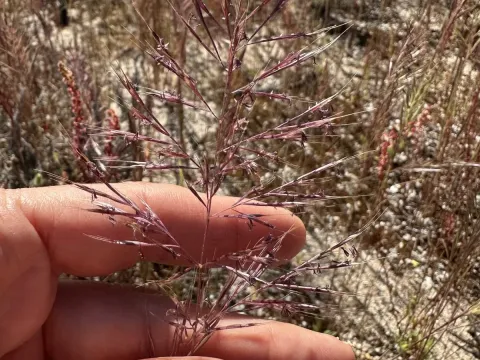
Geniculate fescue
Festuca geniculata
Geniculate fescue belongs to the Poaceae family. It is an annual herbaceous plant typically found in regions with mild Mediterranean climates, where its life cycle is synchronized with the rainy season.
What the section contains
Geniculate fescue
Sowing times for this species depend on the geographical latitude and the arrival of favorable temperatures. Generally, seeds are sown in autumn, allowing the plant to establish a robust root system before the onset of summer drought.
In its natural habitat, geniculate fescue reproduces through self-seeding, forming dense stands in open areas. In agricultural cultivation, it is crucial to ensure seed burial depth does not exceed 1–2 cm to ensure optimal germination rates.
Soil preparation before sowing must include loosening the top layer, as fescue seeds are sensitive to dense, cloddy soil structures. The crop displays rapid growth dynamics during the tillering phase if sufficient moisture is available.
Using high-quality seeds and strictly adhering to sowing rates allows for uniform stands, suitable for intensive livestock grazing or harvesting green mass during early development stages.
The plant has moderate requirements for soil fertility but prefers well-drained soils. Geniculate fescue is capable of tolerating temporary moisture deficits, thanks to its adaptive mechanisms developed for arid environments.
The optimal soil pH range for successful development lies between slightly acidic and neutral. Waterlogged areas with prolonged water stagnation are strictly unsuitable for this species.
The crop is light-loving and does not tolerate heavy shading by taller grass species. In direct sunlight, it forms its most dense and nutrient-rich foliage.
Temperature is a key factor: the species is sensitive to severe frost, so its cultivation range is limited to regions with moderately warm winters.
During agronomic management, it is important to consider the plant's mineral nutrition requirements, particularly nitrogen fertilization during early growth stages to stimulate biomass accumulation.
The agricultural use of geniculate fescue is primarily focused on establishing pasture lands. The biological value of the plant lies in its ability to regrow rapidly after moderate grazing by livestock.
Green mass yield is directly dependent on stand density and timely fertilization. During the flowering phase, feed quality declines due to stem lignification, so utilization must be limited to the early vegetative or booting stages.
The plant is characterized by high nutritional value, making it a valuable component in pasture mixtures for sheep and cattle in arid regions.
Applying intensive irrigation methods can significantly increase total biomass yield, though this requires careful economic analysis of water costs.
Beyond forage purposes, geniculate fescue can be utilized for slope stabilization and soil erosion control due to its extensive root system.
Common issues during geniculate fescue cultivation include fungal diseases, such as cereal rust, especially during periods of high humidity.
Pests typical of most wild and cultivated cereals, such as leaf beetles and various cereal flies, can cause significant damage during the seedling stage.
To minimize risks, crop rotation is essential, and monoculture farming in the same field for many years should be avoided. Preventive fungicide treatments are only applied when economic damage thresholds are reached.
Competition from weeds during the early growth stages represents a significant threat. Effective control methods include mechanical weeding or the use of selective herbicides.
Monitoring crop health during the spring allows for the timely identification of disease outbreaks and prevents the spread of pathogens across the entire field.