
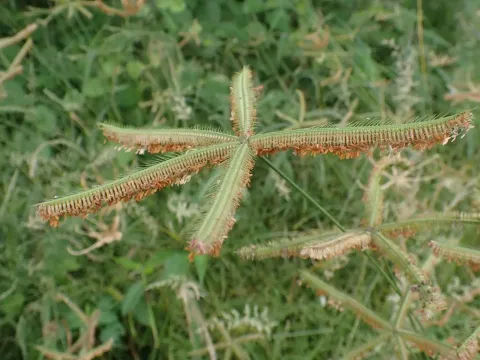
Giant fingergrass
Dactyloctenium giganteum
The optimal sowing time for Giant fingergrass begins with the onset of the rainy season, when the soil retains sufficient moisture for seed germination. In tropical climates, planting is conducted once stable warm temperatures are established.
What the section contains
Giant fingergrass
To ensure uniform seedling emergence, seeds should be sown at a shallow depth of 1–2 cm to prevent obstructing the sprout's growth. The use of specialized seed drills allows for optimal planting density across the field area.
When cultivating this species as a forage crop, both row seeding and broadcasting methods are used depending on soil conditions. It is crucial to avoid surface soil compaction during the preparation of the seedbed.
The temperature during planting should ideally range between 20–30 degrees Celsius to promote rapid development of the primary root system. Extended cold periods can significantly reduce germination rates, requiring timing adjustments.
Seeding rates are calculated based on seed quality and intended use, with higher rates required for dense hayfields compared to those used for extensive grazing purposes.
Giant fingergrass belongs to the Poaceae family and is a robust annual plant capable of achieving impressive growth proportions. The crop thrives in well-lit areas, as it does not tolerate shading by other plant species effectively.
The plant demonstrates high adaptability to various soil types, including sandy and loamy substrates, provided that minimal drainage is present. The ideal pH level falls within the slightly acidic to neutral range.
While the crop requires significant moisture during its active growth period, it possesses a notable ability to endure brief drought spells due to its extensive root architecture. There are high nutritional requirements for nitrogen to maximize growth.
Climatic preferences are limited to tropical and subtropical zones, where the duration of the growing season allows the plant to fully manifest its biological growth potential.
In agronomic practice, it is important to implement crop rotation, avoiding continuous cultivation of grasses on the same site for many years to prevent the build-up of soil-borne pathogens.
The green mass yield of Giant fingergrass depends directly on mineral nutrient levels and rainfall consistency throughout the growing season. Under favorable conditions, the crop is capable of multiple cuts per season.
Peak productivity is achieved through the application of compound fertilizers with a focus on nitrogenous components during the intense tillering phase. Maintaining optimal stand density is essential to prevent weed competition.
The biological characteristics of the species allow it to serve as a highly productive component of natural and sown pastures. Quality assessment includes determining protein content and overall forage value for livestock.
Under irrigated conditions, yields increase significantly compared to rain-fed systems, making it a promising crop for intensive fodder production. Regular top-dressing enables quick vegetative recovery following mowing.
Utilization requires monitoring regrowth rates to ensure that stem quality does not decline due to over-maturation, which is critical for maintaining high-quality hay production.
The primary threats to the crop include fungal diseases that emerge under conditions of high humidity and poor stand ventilation. Symptoms often include leaf spotting, which can significantly reduce total harvest weight.
Among pests, insects that target generative organs and stems pose the greatest risk, potentially lowering seed production capacity. Regular phytosanitary monitoring of the fields is strictly required.
Weeds present intense competition during early developmental stages, making timely weeding or herbicide applications essential components of standard crop management programs.
Lodging can occur due to excessive nitrogen application or strong winds, which hampers mechanized harvesting and leads to increased dry matter losses.
To minimize risks, it is recommended to utilize varieties resistant to local pathogen strains and to adhere strictly to insecticide application protocols when economic injury levels are reached.
Harvesting Giant fingergrass for green forage is conducted during the booting or early heading phase, when the concentration of nutrients is at its peak. Later harvesting leads to increased tissue coarseness.
For hay production, mowing is followed by swathing and wilting. Ensuring uniform drying of the plant mass is vital to prevent mold development during subsequent storage in stacks or bales.
Mechanized harvesting typically uses mower-conditioners, which accelerate moisture removal from stems. An optimal cutting height of at least 5–7 cm is recommended to ensure rapid regrowth of the aftergrowth.
When harvesting for seed, the process is performed at full wax maturity, when the grain acquires its characteristic color and hardness. Minimizing losses during threshing requires precise calibration of machine settings.
Post-harvest treatment involves cleaning seeds from debris and drying them to standard moisture levels, ensuring high germination viability during long-term storage in warehouses.