
Giant Job's tears
Coix gigantea
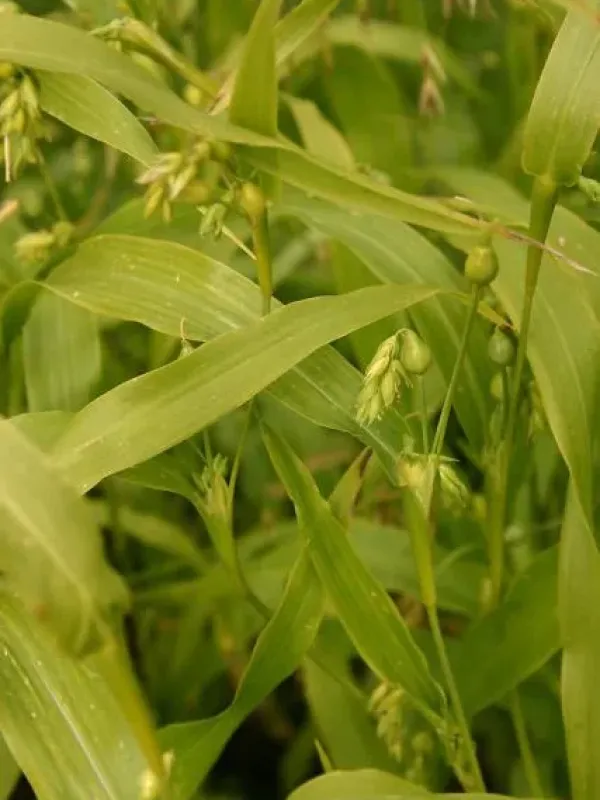
Description
Sowing dates
Coix gigantea, commonly known as giant Job's tears, is a vigorous grass belonging to the Poaceae family. While it exhibits perennial characteristics in tropical environments, it is often managed as an annual crop in temperate agriculture, requiring a long, frost-free growing season to reach its full potential.
Sowing should take place only when soil temperatures consistently exceed 20 degrees Celsius. The seeds have a hard protective coat, so soaking them in water for 24 hours prior to planting is highly recommended to improve germination rates and uniformity.
The seeds are typically sown at a depth of 3 to 5 centimeters, spaced well apart to accommodate the plant's robust tillering habit. Ensuring the soil is well-prepared and free of large clumps will facilitate better root establishment during the early stages of growth.
Row spacing of at least 60 centimeters is advised to prevent overcrowding and ensure adequate airflow, which is critical for moisture regulation around the base of the stalks. Proper spatial distribution minimizes competition and optimizes light capture.
For areas with shorter summers, utilizing a nursery for seedling production before transplanting can provide the plants with the necessary head start, ensuring a larger biomass yield by the end of the season.
Growing requirements
This crop thrives in warm, humid climates and is highly sensitive to frost. It requires a significant amount of water throughout its vegetative stage, making it an ideal candidate for areas with high rainfall or managed irrigation systems.
Fertile, loamy soils that possess high water-holding capacity are best suited for Coix gigantea. The plant is a heavy feeder, especially regarding nitrogen, which is essential for developing the thick, fibrous stems and lush foliage that characterize this giant species.
Exposure to full sunlight is non-negotiable for maximizing growth. Any significant shading will result in spindly, weak plants with a lower total biomass yield and reduced seed production capacity.
While the plant loves moisture, it cannot tolerate long periods of waterlogging, which can trigger root rot. Therefore, selecting fields with good drainage or implementing sub-surface drainage systems is vital for sustainable production.
Regular maintenance, including shallow cultivation of the soil between rows, helps manage weeds and improves soil aeration, contributing to a healthier and more productive stand of the crop.
Yield
The primary agricultural value of Coix gigantea lies in its high production of biomass. Under optimal management practices, including proper fertilization and regular water supply, growers can achieve substantial yields per hectare.
Yield components are heavily influenced by the plant density and the availability of nitrogen during the tillering phase. Supplemental fertilization helps bridge any nutritional gaps in the soil, ensuring that the stalks reach their maximum height and thickness.
When grown for seed, the yield is determined by the number of fertile spikes per plant. Harvesting at the peak of maturity, before natural abscission occurs, is critical to ensuring that the maximum amount of grain is collected.
Consistent environmental conditions and minimal weed pressure are the cornerstones of high-yielding stands. Data suggests that well-maintained plots of Coix gigantea can significantly outperform other traditional fodder grasses in terms of dry matter volume.
Monitoring the progress of the crop throughout the season allows for adjustments in management, which can lead to more predictable and reliable harvest results year over year.
Main diseases and pests
Like many members of the grass family, Coix gigantea is susceptible to fungal infections such as rust and smut, particularly in high-humidity environments. Implementing strict rotation schedules and using certified disease-free seeds are the best preventative measures.
Pest pressures primarily come from sap-sucking insects like aphids and leafhoppers, which can weaken the plant and serve as vectors for various diseases. Scouting fields regularly allows for timely intervention.
Integrated Pest Management (IPM) strategies, which prioritize biological controls and spot-treating with appropriate insecticides, are recommended over blanket sprayings to preserve beneficial insect populations in the field.
Competition from weeds during the first few weeks is the greatest threat to seedling survival. Once established, the fast growth of the crop generally shades out competitors, but early season weeding is essential for success.
Awareness of regional pest life cycles is vital for planning chemical or mechanical applications. Proactive measures are always more effective than reactive treatments once an infestation has already taken hold.
Harvesting
Harvesting for fodder should be timed carefully to coincide with the early heading stage. This is when the plant's nutritional profile, specifically the ratio of protein to fiber, is most balanced for livestock consumption.
When harvesting for grain, moisture content must be monitored closely as the seeds ripen. Once the spikes change color and the grain hardens, mechanical harvesting should be performed to avoid significant losses to bird damage or natural seed shattering.
Post-harvest management involves rapid drying of the seed or forage to prevent the development of mycotoxins, which can occur if the moisture content remains too high in storage.
Using specialized equipment adjusted for the size and density of the stalks ensures that the harvest is efficient and that losses are kept to an absolute minimum during the collection process.
The stubble remaining after the harvest can be incorporated back into the soil as organic matter, which improves the soil structure and nutrient profile for the subsequent season's planting.