
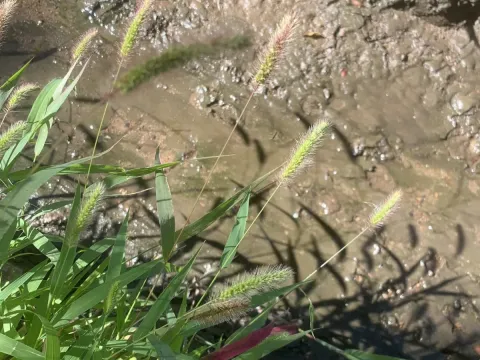
Giant foxtail
Setaria gigantea
Giant foxtail (Setaria faberi), a member of the Poaceae family, is a warm-season annual grass. Sowing should be carried out once the soil has warmed up, typically in late May or early June, when the danger of frost has passed.
What the section contains
Giant foxtail
The optimal soil temperature for germination is between 15 and 18 degrees Celsius. Preparing a fine seedbed is essential to ensure consistent seed-to-soil contact and promote uniform emergence of the crop.
The seeding rate typically ranges from 10 to 15 kg per hectare, depending on the method used. Rows should be spaced adequately to allow for subsequent maintenance and potential mechanical weeding.
Depth of planting should be maintained at 2–3 centimeters. Placing seeds too deep in the soil can result in poor emergence and reduced stand density, which negatively impacts overall productivity.
Ensuring accurate calibration of the seeding equipment is crucial for achieving the desired plant population, which is necessary to minimize weed competition during the early growth stages.
This crop thrives under warm conditions and long day lengths. It is known for its high adaptability to varying environmental stressors, including periods of moderate drought during the growing season.
Giant foxtail performs best in well-drained loamy or sandy soils. While it is adaptable, it does not tolerate poorly drained conditions or stagnant water, which can lead to root damage and stunted growth.
Soil pH should ideally be neutral, within the range of 6.0 to 7.0, to facilitate the efficient uptake of essential nutrients required for biomass production.
Adequate nitrogen availability is a key factor in maximizing yield. Proper fertilization programs, synchronized with the rapid vegetative growth phase, significantly improve forage quality and quantity.
The plant demonstrates a strong response to well-timed fertilizer applications, which help the crop achieve its full growth potential during the peak of the summer season.
Under optimal management, giant foxtail can produce high biomass yields, often reaching 200–300 centners per hectare. Its rapid growth rate makes it a valuable component in forage systems.
Harvesting at the early heading stage is critical to ensure the best balance between digestible protein and fiber content, providing a nutritious feed source for livestock.
Yield stability is supported by effective moisture management and timely weed control. In areas with sufficient rainfall, multiple cuts per season may be possible, significantly increasing total dry matter production.
Seed yields range from 15 to 25 centners per hectare. Success in seed production depends on maintaining optimal plant spacing and preventing seed loss due to premature shattering at maturity.
Data suggests that consistent growth can be sustained throughout the season if the crop is provided with adequate nutritional support and shielded from severe competition by weeds.
Pathogenic threats include various types of smut and rust, which are most prevalent under conditions of high humidity or poor air circulation within the canopy of the crop.
Common insect pests, such as aphids and various cereal-feeding beetles, can damage leaves and reproductive parts. Monitoring for these pests is essential during the vegetative stage.
Soil-dwelling pests like wireworms pose a threat to seed and seedling survival, particularly in fields with high organic matter or previous grass crops that may harbor these populations.
Integrated pest management strategies are recommended, focusing on crop rotation to break the life cycles of specific pathogens and insect populations that target this grass.
The use of chemical controls, when necessary, must be executed in accordance with economic thresholds to ensure cost-effectiveness and compliance with harvest interval requirements.
Harvesting for forage is recommended during the initial heading phase to maximize nutrient quality. Using disc mowers with conditioners speeds up the drying process for hay production.
For silage, the plant should be chopped to the appropriate length and packed firmly into silos or wrapped bales to exclude oxygen, which is necessary for effective fermentation.
Seed harvest requires careful timing; the crop must be harvested at the wax maturity stage to minimize shattering losses. Specialized headers may be needed to catch loose seeds during the process.
Post-harvest conditioning includes cleaning and drying the seeds to a moisture level of 12–14 percent to prevent heating and spoilage during storage in bins or warehouses.
Implementing proper storage practices, such as controlling temperature and aeration, is vital to preserve seed viability and maintain the quality of the harvested biomass for future use.