
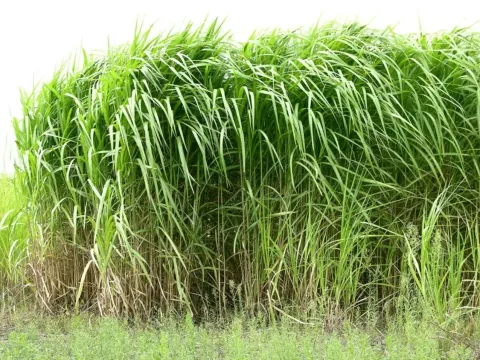
Giant miscanthus
Miscanthus hybrids
Giant miscanthus (Miscanthus × giganteus) is a member of the Poaceae family. It is a sterile interspecific hybrid that does not produce viable seeds; therefore, it is propagated exclusively through vegetative division of rhizomes.
What the section contains
Giant miscanthus
Planting is carried out in early spring, typically between April and May, once the soil temperature consistently reaches 10–12°C. Timely planting ensures that the rhizomes have sufficient time to establish before the onset of summer heat.
The standard planting density ranges from 15,000 to 20,000 plants per hectare. This density is crucial for achieving a uniform stand, which eventually creates a canopy that suppresses weed growth effectively.
Rhizomes should be planted at a depth of 10–15 cm to protect them from surface drying and frost. Proper soil-to-rhizome contact is essential to facilitate root development and shoot emergence.
During the first two growing seasons, weed control is a priority. Once the crop reaches maturity, its vigorous growth and deep root system allow it to dominate the site and minimize the need for external inputs.
Giant miscanthus thrives in a variety of soil types but prefers deep, fertile, and well-drained soils with a neutral pH. It is particularly sensitive to severe waterlogging and excessive salinity, which should be avoided when selecting a site.
As a warm-season grass, it is heat-tolerant but shows remarkable winter hardiness once established. In colder climates, a layer of snow acts as a natural insulator, protecting the dormant rhizomes from extreme low temperatures.
Adequate soil moisture is critical during the establishment phase. After the first two years, the plant develops an extensive, deep root system, making it highly drought-tolerant and capable of sustaining high productivity.
The crop responds well to nitrogen fertilization during the early stages of establishment. In mature stands, the practice of leaving foliage on the field helps recycle nutrients, maintaining long-term soil fertility.
Its adaptability to diverse climatic zones makes miscanthus a highly reliable energy crop. It can withstand significant seasonal variations, provided the soil moisture requirements are met during the critical spring growing period.
The primary value of giant miscanthus lies in its exceptional biomass productivity, which can reach 20–30 tons of dry matter per hectare annually. Peak yields are usually achieved by the third or fourth year after planting.
This high yield is driven by the plant's C4 photosynthetic pathway, which allows for maximum solar energy conversion even in challenging thermal conditions during the peak of summer.
A well-managed miscanthus plantation can remain productive for 15–20 years. This longevity reduces the frequency of re-establishment, thereby decreasing long-term operational costs for farmers.
The quality of the biomass is characterized by low moisture content and low ash levels if harvested at the correct time. This makes it an ideal feedstock for combustion processes, including pellet and briquette production.
Consistent annual harvests ensure a reliable supply of raw material for bioenergy plants, pulp and paper manufacturers, and other industrial sectors looking for sustainable, cellulose-based alternatives.
Giant miscanthus is widely recognized for its high level of resistance to pests and diseases. Unlike many traditional crops, it rarely requires the application of fungicides, herbicides, or insecticides on a commercial scale.
Occasional leaf spot or rust infections may occur under very humid conditions, but these are typically superficial and do not result in significant reductions in total biomass volume or quality.
Insects like wireworms may occasionally target the rhizomes of young plants, but such incidents are usually localized and can be managed through good site preparation and the selection of healthy planting material.
The most significant threat to a new plantation is competition from aggressive perennial weeds. Pre-planting site preparation and initial weed suppression are necessary to ensure the crop gains a competitive advantage.
While the risk of pathogen buildup is low, maintaining high crop hygiene and monitoring for localized stress factors remains an essential part of professional agronomic management.
Harvesting is typically performed once a year, either in late winter or early spring, after the plant has reached senescence. This allows the biomass to dry naturally on the field to a moisture content of 15–20%.
Harvesting equipment involves standard mowing and baling machines or forage harvesters, depending on the desired form of the end product (bale or chips). Efficient logistics are key to managing large volumes of biomass.
The residues left on the field—mainly leaves—provide valuable organic matter back to the soil. This practice supports carbon sequestration and improves the soil structure over the lifespan of the plantation.
The produced biomass serves primarily as a renewable energy source for heat and power. Its high energy density makes it a direct competitor to coal and other fossil fuels in heating applications.
Beyond energy, the cellulose-rich fiber is utilized in the production of bio-composites, paper products, and lightweight insulation materials, highlighting the diverse industrial potential of this perennial crop.