
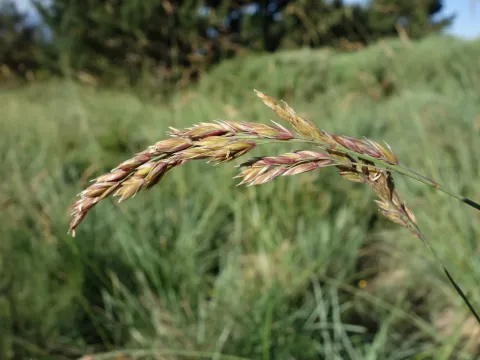
Patzkea paniculata
Patzkea paniculata
Patzkea paniculata is a perennial herbaceous plant belonging to the Poaceae family. Historically linked to the Festuca genus, it shares many structural characteristics with fescues, making it a robust and reliable choice for various gardening environments.
What the section contains
Patzkea paniculata
The plant thrives in full sun conditions but maintains good health in partial shade. It is natively adapted to rocky terrains and mountain slopes, which accounts for its high resilience to wind, harsh temperatures, and periods of seasonal drought.
Regarding soil preferences, the plant requires well-draining substrates. It performs best in sandy or gravelly soils where water does not accumulate. Heavy clay soils are generally unsuitable unless amended to improve drainage to protect the root crown from rot.
The species is known for its cold hardiness, surviving freezing temperatures in temperate zones. Once established, it requires minimal irrigation, making it a low-maintenance option for xeriscaping or sustainable landscaping projects.
Its primary use is ornamental, appreciated for its arching leaves and panicle-shaped inflorescences. It is frequently employed in rock gardens, prairie-style plantings, and erosion control on slopes due to its dense root system.
The most significant threat to Patzkea paniculata is fungal infection caused by poor air circulation or excessive moisture. Waterlogged soil significantly increases the risk of root and crown rot, which can prove fatal to the plant.
Insect pests such as spider mites or aphids may occasionally infest the foliage, particularly during dry, hot spells. Regular monitoring of the underside of the leaves is recommended to detect any pest activity before it spreads significantly.
Cultural control is the most effective management strategy. This includes maintaining proper spacing between individual plants to promote airflow, which prevents the build-up of micro-humidity conducive to pathogens.
Cleaning out dead organic material in early spring is essential. By cutting back old growth, gardeners reduce the overwintering sites for insects and diseases, ensuring a healthy start for the new season's growth cycle.
While chemical interventions are rarely needed for this hardy grass, fungicidal treatments may be applied if environmental conditions cause an uncontrollable outbreak of leaf spots or other foliage diseases.