
Paspalum racemosum
Paspalum racemosum
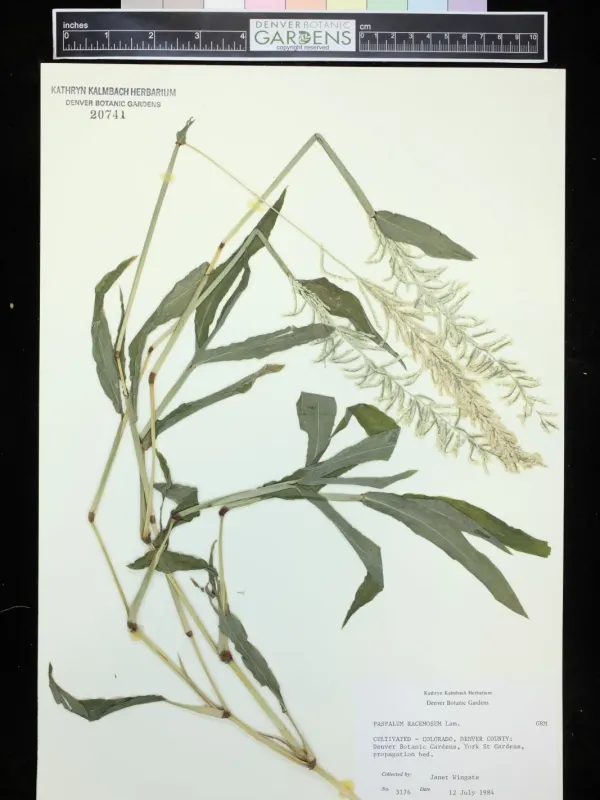
Description
Sowing dates
Paspalum racemosum is a perennial grass species belonging to the Poaceae family. Sowing typically occurs during the warm season, as the plant requires sufficient soil temperatures to ensure rapid germination and initial seedling establishment.
Proper seedbed preparation is critical for this species, as its seeds are relatively small. The soil must be fine-tilled and levelled to ensure that the seeds are not buried too deeply, which could impede successful emergence.
In industrial agriculture, the use of precision seeders is recommended to achieve uniform spacing. After sowing, using a roller helps to establish good seed-to-soil contact, which is vital for moisture uptake in variable soil conditions.
The plant can also propagate vegetatively through stolons. In many pasture development scenarios, planting stolon cuttings is a more reliable method for achieving quick soil coverage and creating a dense sward compared to seeding alone.
Optimal sowing density depends on the target use of the stand. For hay production, a higher density is preferred to suppress weed competition, while for pasture, a balance must be struck to allow for aggressive root growth.
Growing requirements
Paspalum racemosum is known for its preference for moist environments. It performs exceptionally well in low-lying areas and is highly tolerant of occasional waterlogging, making it a valuable crop for wetlands that are unsuitable for other grasses.
While the plant shows adaptability to various soil types, it reaches maximum biomass production in fertile loams. Soil pH should ideally be within the neutral range, though it can tolerate slight acidity without significant loss in productivity.
Sunlight is a key factor for the plant's metabolic activity. It is a heliophilous species, meaning that areas with full exposure to sunlight are best. Shady environments significantly reduce biomass yield and sward density.
The ideal climate for this grass is tropical or warm-temperate. The plant lacks cold hardiness and may suffer irreversible damage from heavy frosts, which restricts its cultivation to regions with a sufficiently long growing season.
Agronomic management requires balanced nitrogen fertilization to sustain high biomass output. Regular applications of macro-nutrients post-harvest are necessary to stimulate rapid regrowth and maintain the stand's vigour over multiple years.
Yield
The yield of Paspalum racemosum is highly dependent on irrigation management and nutrient availability. Under optimal conditions, the grass provides multiple cuts throughout the growing season, contributing to a reliable annual biomass supply.
As a forage crop, it is valued for its nutritional profile, particularly in its early vegetative stages. It provides a dense, palatable source of dietary energy for livestock, maintaining its quality even under high-moisture conditions.
Grazing management is crucial to maximize yield. A rotational grazing system is advised to prevent overgrazing, which can degrade the root system and diminish the long-term productivity of the pasture.
The production of dry matter per hectare serves as the primary metric for agricultural efficiency. Monitoring soil fertility and adjusting fertilizer rates ensures that the stand meets production targets consistently.
Ultimately, this grass is recognized for its high productivity in favorable environments, making it a reliable choice for farmers focusing on intensive livestock production and high-quality hay production.
Main diseases and pests
Paspalum racemosum is generally resilient, but it faces risks from fungal pathogens in high-humidity environments. Leaf rust and various spot diseases are the most common issues that can reduce the aesthetic and nutritional quality of the forage.
Insect pests such as grass-feeding larvae can cause localized damage. Integrated Pest Management (IPM) strategies, including regular field scouting and the use of resistant varieties, are essential for mitigation.
Weed encroachment is a primary threat during the establishment phase. Once the stand is established and dense, it can effectively compete, but early intervention is necessary to prevent invasive species from gaining a foothold.
Soil pathogen buildup can occur if the land is used for long-term monoculture. Implementing crop rotation cycles helps disrupt the lifecycle of pests and contributes to improved soil health and stand longevity.
- Application of targeted fungicides during wet seasons.
- Maintenance of proper soil drainage to prevent fungal growth.
- Control of livestock grazing pressure to avoid overgrazing.
- Regular field scouting for early pest detection.
- Use of high-quality, certified weed-free seed stock.
Harvesting
Harvesting for forage should take place at the initiation of the heading stage. This timing is critical because it ensures the highest ratio of leaf to stem, providing the best protein and energy content for animal feed.
Efficient haymaking requires rapid drying. Using modern tedding machinery is vital to turn the crop frequently and ensure even drying throughout the biomass, which prevents mold and spoilage in storage.
Mowing height should be carefully calibrated. Cutting too low can remove essential growth nodes, significantly slowing down the recovery time for the next cycle. A moderate stubble height is recommended to promote persistence.
Seed harvesting requires precision machinery with optimized cylinder speeds to avoid mechanical damage to the seeds. The process is usually timed when the seeds reach a firm dough stage to minimize pre-harvest shattering.
Post-harvest conditioning involves cleaning and air-drying the seeds until they reach a moisture content suitable for long-term storage, which preserves their viability and germination potential for the next season.