
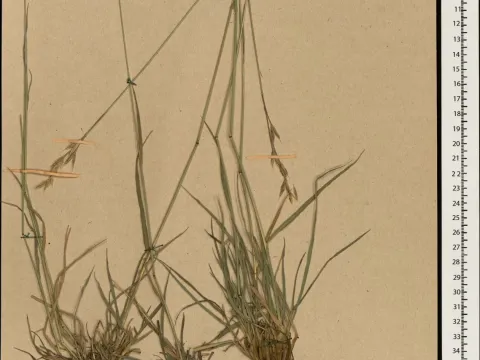
Paulsen's Brome
Bromus paulsenii
Paulsen's Brome is a perennial grass species, making it ideal for spring or late autumn sowing. Early spring planting is generally preferred as it allows the seeds to utilize soil moisture effectively during the germination phase.
What the section contains
Paulsen's Brome
Seeds should be placed at a depth of 1.5 to 3 centimeters to ensure optimal soil-to-seed contact. In late autumn sowing, care must be taken to prevent premature germination during winter warm spells.
The standard seeding rate is approximately 12–15 kilograms per hectare, depending on the purity of the seed batch. Proper row spacing is essential for maintaining plant health and ensuring enough airflow across the field.
Given the slow initial development of the species, weed control during the establishment year is critical. Rolling the field after seeding significantly improves the success rate of germination by increasing soil compaction around the seeds.
Mechanical harrowing after seedling emergence is recommended if a soil crust has formed, as this can impede the growth of young plants and reduce the overall stand density.
Belonging to the Poaceae family, Paulsen's Brome is naturally adapted to arid and high-altitude regions. It exhibits remarkable resilience to drought conditions and is well-suited to areas with high temperature fluctuations.
The plant thrives on well-drained rocky, sandy, or light loam soils. It is particularly valued for its ability to grow on impoverished soil types where other conventional forage crops would typically fail to thrive.
As a sun-loving plant, it requires open, well-lit areas to reach its maximum productivity. It has shown significant tolerance to harsh winters, making it a reliable choice for regions with continental climates.
This grass is also noted for its salt tolerance, which makes it a viable candidate for the reclamation of degraded or saline lands. Its strong root system helps in soil stabilization, especially in hilly terrains.
Due to its biological characteristics, it requires minimal inputs and is highly efficient in its water use, which is a major advantage for sustainable agricultural practices in dry zones.
The biomass yield of Paulsen's Brome is primarily dictated by water availability during the spring growing season. With adequate rainfall, it is capable of producing a consistent and high-quality green forage mass.
Seed production is another vital attribute of this species, as it maintains its own stand density through natural reseeding in pastures. Harvesting for seeds should be done at the full wax ripeness stage.
It responds well to grazing pressure, showing a high capacity to recover after being grazed by livestock. This quality ensures its long-term viability as a key component of natural pastures.
For hay production, timing is essential. Harvesting before the stems become overly lignified preserves the nutritional quality required for livestock feed. It is often used in grass-legume mixtures.
By contributing to soil organic matter accumulation, this perennial grass helps maintain the long-term fertility of the grazing lands where it is allowed to grow and spread.
Paulsen's Brome is naturally resistant to many common grass diseases. However, in conditions of excessive humidity, powdery mildew may develop, requiring proper field management to ensure good ventilation.
Rust diseases can occur if the stand is too dense, negatively impacting the forage quality. Following proper crop rotation and maintaining recommended seeding rates are the best preventive measures.
Insect pests that target the reproductive structures are the primary concern for seed production. Regular monitoring of the stand is recommended to detect any outbreaks of harmful insects early.
Small rodents can pose a threat, particularly during the dormant winter period. Integrated pest management strategies, including traditional agronomic practices, are usually sufficient to keep populations in check.
It is crucial to inspect the field immediately after winter, as this is the period when plants are most susceptible to pest damage and stress due to the transition from the dormant phase.
Mechanical harvesting with grain combines is the most efficient method for seed collection. The machinery must be precisely calibrated to handle the small seeds, and harvest timing is critical to minimize loss.
When harvesting for hay, the grass should be mown before the stems harden, ensuring that the final product remains highly palatable and nutrient-rich for the animals during the winter months.
The cut biomass should be dried in windrows to facilitate uniform moisture removal. Well-cured hay provides excellent nourishment for cattle, horses, and sheep raised in the region.
Post-harvest management should include harrowing to remove dead vegetation, which helps in stimulating vegetative growth and better tillering for the upcoming season.
Stored seeds must be kept in cool, dry conditions with proper ventilation to maintain high viability and prevent the development of mold, ensuring good results for the next planting season.