
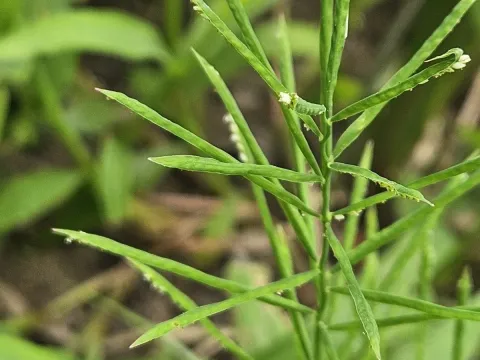
Water finger grass
Paspalum repens
Water finger grass (Paspalum repens) is a perennial member of the Poaceae family, widely recognized for its preference for aquatic and semi-aquatic habitats. It is biologically adapted to thrive in environments where water availability is consistently high.
What the section contains
Water finger grass
The species originates from the tropical regions of the Americas and has spread across various subtropical climates. Its distribution is strictly limited by temperature, as it lacks cold hardiness and requires warm conditions throughout its growing cycle.
It prefers soils that are rich in organic matter and capable of maintaining moisture. This plant is particularly resilient to occasional waterlogging, which often kills competing weed species and allows Paspalum repens to dominate in wetland areas.
Adequate sunlight is a critical requirement for successful development. While the grass can handle high moisture levels, lack of direct solar radiation inhibits its ability to produce significant biomass and reduces the vigor of its stolons.
Agrotechnical practices involve ensuring the ground does not dry out and providing sufficient nutrient inputs. Because it spreads via creeping stems that root at the nodes, it forms a dense mat that is efficient at stabilizing topsoil.
The primary agricultural use of Paspalum repens is as a forage crop for livestock grazing. Its ability to regenerate quickly from stolons after grazing makes it a sustainable choice for rotational pasture systems in warm climates.
Harvesting for silage or green chop should be timed during the pre-flowering vegetative stage. This timing ensures the highest levels of crude protein and digestibility, providing maximum nutritional benefit for the livestock.
Management of the pasture requires careful monitoring of grazing intensity. If the grazing pressure is too high, the creeping stems can be damaged, leading to long-term thinning of the grass cover and potential soil erosion.
The high water content of the grass makes it better suited for fresh consumption rather than traditional hay making. Rapid drying is difficult in its native humid environments, making ensiling a more efficient preservation method.
Regular maintenance, including nutrient supplementation, is essential for sustaining high yields over several seasons. In ideal conditions, this grass can withstand multiple cutting cycles, providing a steady supply of fodder throughout the growing year.