
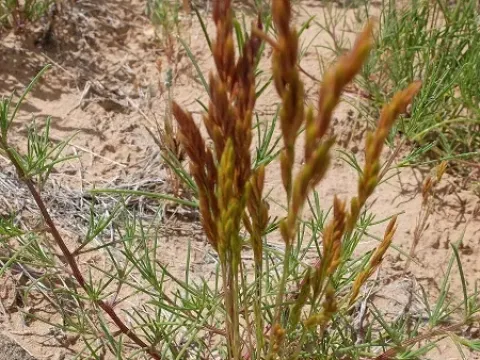
Vulpia
Vulpia
Sowing Vulpia requires a strategic approach based on its life cycle as a cool-season annual. The optimal time for planting is typically in late summer or early autumn, allowing the seeds to germinate and establish before the onset of winter.
What the section contains

Vulpia
Spring sowing is generally less successful due to the plant's rapid transition into the reproductive stage when day length increases. This quick growth phase often results in low biomass production compared to autumn-sown stands.
The seeds should be sown at a shallow depth of 1 to 2 centimeters. Because the seeds are quite small, they require a well-prepared, firm seedbed to ensure proper soil contact and moisture retention during germination.
Seeding rates typically range from 10 to 15 kilograms per hectare, depending on whether the plant is grown as a monoculture or as part of a pasture seed mixture. Higher densities are recommended to suppress competing weed species.
Proper field leveling is essential to prevent seed burial in uneven depressions. A uniform seed distribution contributes to even maturation, which is crucial for high-quality forage or consistent seed harvesting.
Vulpia is a member of the Poaceae family, known for its adaptability to various environments. It thrives in soils where more demanding grasses often fail, including sandy, nutrient-poor, and rocky substrates.
The plant demonstrates remarkable drought tolerance. Its biological strategy of completing its life cycle during the cooler, wetter months allows it to escape the extreme heat and dry conditions typically found in summer.
Soil acidity is not a major limiting factor for Vulpia. It grows well in a wide range of soil pH levels, making it a valuable species for reclaiming marginal lands or stabilizing soils with poor fertility profiles.
Sunlight is critical for the development of Vulpia. It performs best in open, sunny locations where it can maximize photosynthetic activity, ensuring robust growth and consistent seed head production.
It has relatively modest fertilizer requirements compared to intensive forage grasses. It can maintain productivity on soils with low organic matter, provided there is adequate moisture during the early vegetative stages.
Fungal diseases are the primary threats to Vulpia crops, especially rusts and powdery mildew. These pathogens tend to proliferate during periods of high humidity and moderate temperatures, affecting leaf tissue.
Insect pests, such as cereal aphids and various grain flies, can cause significant damage to young seedlings. Infestations can lead to thinned stands and poor uniformity, particularly in early spring.
Root rots pose a serious risk in poorly drained soils or in fields prone to waterlogging. Excessive soil moisture encourages pathogen development, which can rapidly destroy the root system of this annual grass.
Vulpia can serve as an alternative host for certain plant viruses that affect cereal crops. Consequently, it is advisable to maintain spatial separation between Vulpia fields and major winter cereal production areas.
Integrated pest management, including crop rotation and the use of resistant varieties, is the most effective approach to managing these threats without relying exclusively on chemical interventions.
For high-quality forage, Vulpia must be harvested at the heading stage, before the seeds begin to develop fully. At this peak period, the plant offers the best balance of protein, sugars, and digestibility.
Delaying harvest leads to a rapid increase in lignification and stem coarseness. Once the plant reaches maturity, its nutritional value declines significantly, making it less suitable as feed for livestock.
Mechanical harvesting with a standard mower is effective. The cutter bar should be set to an appropriate height to allow for potential regrowth, if environmental conditions permit, or to ensure clean removal from the field.
Seed harvesting should be performed using direct combining when the seed heads turn golden-brown. Timing is critical to prevent excessive seed shattering, which occurs naturally as the plant reaches full maturity.
Proper drying is essential after cutting to maintain hay quality. Because Vulpia is fine-stemmed, it dries relatively quickly, but it must be turned regularly to ensure even moisture loss and to prevent mold growth in the bale.