
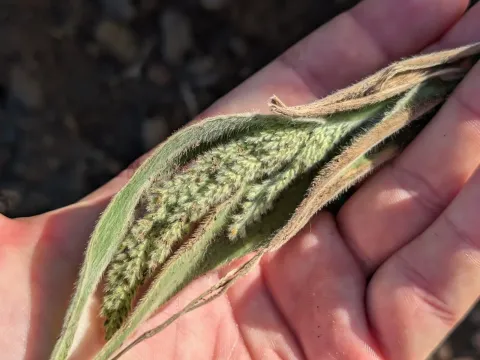
Panicum torridum
Panicum torridum
Panicum torridum belongs to the Panicum genus, which dictates that optimal sowing times occur during periods of consistent soil warming. In cultivation regions, sowing begins when the topsoil temperature reaches 12–15 degrees Celsius.
What the section contains
Panicum torridum
To ensure uniform emergence, seeds are sown at a depth of no more than 2–3 centimeters. Excessive planting depth results in weakened shoots and a reduction in the overall stand density of the crops.
The standard row-seeding method with row spacing between 15 and 30 centimeters is considered optimal for this crop, as it allows the plants to utilize available resources most effectively.
In arid climates, sowing dates may be adjusted to earlier windows to take advantage of residual winter soil moisture. It is crucial to prevent young shoots from being exposed to potential late spring frosts.
Active development of the plant begins once air temperatures reach 20–25 degrees, characterizing it as a heat-loving crop with a relatively short growing season.
This grass species, belonging to the Poaceae family, demonstrates exceptional resistance to high solar radiation and heat stress. It is well-adapted to growth in tropical and subtropical climatic conditions.
The crop prefers well-drained, light-textured soils. It is capable of enduring short-term drought periods, which makes it a promising agricultural candidate for regions with low precipitation levels.
Soil fertility requirements are moderate; however, the application of nitrogen fertilizers during early growth stages significantly accelerates the accumulation of green biomass. The plant does not tolerate waterlogging or stagnant water.
The optimal pH range for stable growth lies within slightly acidic to neutral levels. In saline soils, crop productivity may decrease notably due to the inhibition of the root system.
Adequate light is a critical success factor. Panicum torridum is a long-day plant and reacts negatively to shading caused by other crops or dense weed infestations.
The yield potential of green biomass depends directly on nitrogen availability and the temperature regime during the active tillering phase. In favorable years, yield figures can be quite significant.
Grain production, when grown for seed purposes, varies based on seeding density and the effectiveness of weed control measures conducted throughout the season.
Stable yields are achieved through strict adherence to crop rotation, which prevents soil depletion caused by monoculture. The use of modern hybrids allows for an increase in the average grain mass per panicle.
Reduced yields are often observed due to micronutrient deficiencies, such as copper or zinc, which can be corrected through foliar feeding during the booting stage.
Final productivity indicators are determined by the cumulative active temperatures over the growing season, as the plant relies heavily on heat accumulation to form high-quality grain.
The crop is susceptible to fungal diseases such as rust and various types of smut. The flowering stage is considered the most high-risk period, particularly during high humidity conditions.
Among pests, cereal flies and aphids pose the greatest threat, as they can damage young seedlings and sap the plant of vital nutrients, significantly weakening its immune system.
Disease management includes treating seeds with systemic fungicides before sowing to reduce the risk of initial soil-borne pathogen infection.
Weeds are the primary competitors for water and light. Inter-row cultivation is highly recommended to maintain weed-free fields and ensure maximum crop health.
To minimize threats, it is necessary to follow strict quarantine protocols and avoid sowing on fields that have previously experienced outbreaks of specific grain crop diseases.
Harvesting for grain occurs at full maturity, when seed moisture drops to 14–16 percent. It is critical to prevent grain shattering by avoiding delays in harvesting once the plant reaches physiological maturity.
When used for forage, the crop should be mowed at the panicle-emergence phase, when the nutritional value of the green biomass is at its peak for livestock consumption.
A two-stage harvesting method can be employed to reduce grain loss if panicles ripen unevenly. This involves swathing the crop first, followed by threshing the dried windrows.
Post-harvest processing involves thorough cleaning of grain to remove impurities and drying to standard moisture levels, which is necessary to prevent spoilage during long-term storage.
The harvested crop requires specialized storage conditions in dry, well-ventilated areas to maintain seed viability and ensure the quality of the forage supply.