
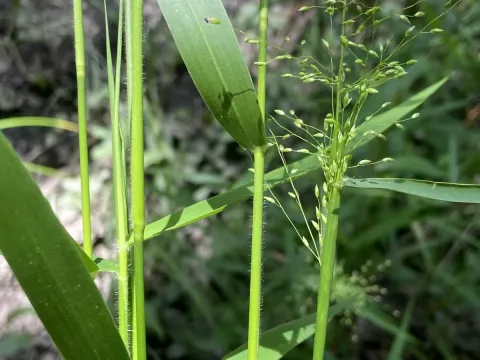
Panicum scabriusculum
Panicum scabriusculum
Panicum scabriusculum belongs to the diverse Poaceae family. This perennial grass is typically found in habitats with high moisture levels, such as floodplains and marshy areas, where it plays a key role in the local ecosystem.
What the section contains
Panicum scabriusculum
Botanically, the species is characterized by its robust root structure, which allows it to thrive in heavy, damp soils. Its stems are erect and can reach significant height under favorable conditions, providing a substantial amount of biomass.
The climate requirements for this plant center on heat and moisture. It is a warm-season grass that grows most actively during periods of long, sunny days and high temperatures, making it unsuitable for regions with very short or cool growing seasons.
It prefers fertile, loamy soils that can retain sufficient water. While it can handle saturation better than many other forage crops, it still requires proper soil structure to prevent root suffocation during prolonged waterlogging.
Agronomic management involves selecting fields with adequate drainage capacity. While the plant loves water, stagnant conditions combined with high heat can create an environment conducive to plant stress and diseases.
The primary agricultural use for Panicum scabriusculum is in the forage sector. It is valued for its capacity to produce multiple cuts of green matter during a single growing season, provided that fertility is managed correctly.
To maximize yields, supplemental nitrogen application is recommended, as this stimulates leaf development and overall foliage density. Harvesting should be performed just before the onset of flowering to maintain the best nutritional balance.
The nutritional profile of the harvested hay makes it a useful base for livestock rations. When harvested at the right stage, it provides a good balance of fiber and protein necessary for maintaining herd health.
In addition to silage and hay production, the plant is investigated for its potential in land rehabilitation projects, particularly in restoring vegetative cover in degraded, wet landscapes where other grasses struggle.
Seed production requires specific management, as seed heads can shatter if not collected at the optimal time. Farmers focused on seed harvesting should implement systematic monitoring to minimize grain loss during the maturation phase.
Like many species in the Panicum genus, this plant can be susceptible to various fungal pathogens, especially rusts and leaf spots. These diseases thrive in the humid environments where the plant is usually cultivated.
Insect pests, particularly aphids and grass-feeding beetles, can cause significant damage to young plants. Early detection is crucial, as severe infestations can lead to stunted growth and reduced yields at the end of the season.
Weed competition represents a major challenge, especially for newly established stands. Since the initial growth rate of Panicum scabriusculum is relatively slow, implementing an effective weed control strategy is essential.
Soil-borne pathogens can become an issue if the crop is planted in the same field for too many consecutive years. A balanced crop rotation program is recommended to break the life cycles of these common agricultural pests.
Proper field maintenance, including ensuring machinery is cleaned to prevent cross-contamination, is a critical step in a professional agronomic strategy to ensure the longevity and productivity of the perennial stand.