
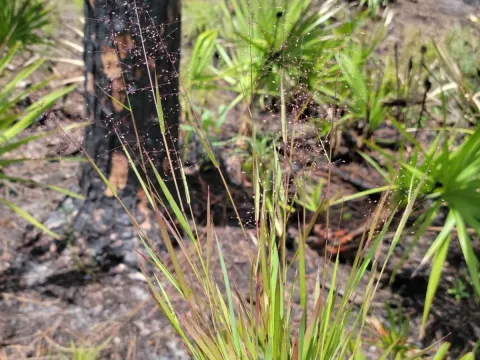
Broomcorn millet
Panicum glabrifolium
Sowing dates for broomcorn millet are strictly dependent on soil warming. As a heat-loving crop, planting begins when the soil temperature at a depth of 5–10 cm reaches +12…+14°C.
What the section contains
Broomcorn millet
Early sowing in cold soil leads to delayed germination, uneven stands, and increased competition from weeds. In temperate climates, the optimal window for sowing is the second half of May.
The sowing technology involves using standard or row-crop planters depending on field conditions. Ensuring uniform seeding depth is critical for reliable and consistent emergence of seedlings.
Seedbed preparation should focus on creating a fine-grained structure to provide optimal seed-to-soil contact. This stage is vital for accelerating the initial growth phase of the millet crop.
The seeding rate must be adjusted based on regional moisture levels and soil fertility, typically ranging from 3 to 5 million viable seeds per hectare to ensure optimal plant density.
Broomcorn millet (Panicum glabrifolium), a member of the Poaceae family, is renowned for its high drought and heat tolerance. This characteristic makes it an ideal crop for arid and semi-arid regions.
The crop thrives in fertile chernozem and chestnut soils with good aeration. It performs poorly in heavy, waterlogged clay soils that tend to crust over, which can hinder root development.
Millet has a high demand for light throughout its growing cycle. Any significant shading or prolonged cloudy conditions can negatively impact panicle formation and grain filling stages.
With an efficient root system, the plant can extract moisture from deeper soil horizons. However, the period between tillering and panicle emergence is the most critical for water availability.
Proper crop rotation is essential, as millet can accumulate soil-borne pathogens. Optimal predecessors include legumes or winter cereals that effectively manage soil moisture reserves.
Yield potential of broomcorn millet depends heavily on agrotechnical precision and moisture levels during key growth stages. Under optimal conditions, yields typically reach 2.5 to 3.5 tons per hectare.
The application of mineral fertilizers, particularly nitrogen and phosphorus, can significantly boost grain mass. However, excessive nitrogen should be avoided to prevent lodging in windy conditions.
Weed control during the first month after emergence is a prerequisite for a high yield. Since millet grows slowly at the start, early competition from weeds can drastically reduce productivity.
Broomcorn millet exhibits stable yields even in drought-prone years compared to other spring cereals, thanks to its biological plasticity and efficient transpiration rate.
Post-harvest processing, including cleaning and sorting, is essential to meet grain market standards and ensure the absence of impurities, which improves the crop's long-term storage viability.
Smut is the most dangerous disease for millet, capable of devastating the entire crop by destroying the panicles. Preventive seed treatment with fungicides is mandatory to mitigate this risk.
Pests like the millet midge and aphids can cause significant damage by feeding on the reproductive organs, leading to empty florets and reduced grain quality. Insecticide application is often necessary.
Frit flies can damage young seedlings, leading to stunted growth or total plant failure. Monitoring pest populations in the early stages is crucial for making timely management decisions.
Bacterial spots and leaf blights can occur in humid weather conditions, reducing the plant's photosynthetic capacity. Integrated pest and disease management is the best approach for long-term health.
- Fungicide seed treatment before planting.
- Monitoring for pests during the panicle emergence phase.
- Maintaining spatial isolation from other grass crops.
- Selecting disease-resistant or tolerant varieties.
- Timely application of chemical protection agents.
Harvesting broomcorn millet is a precise technological process due to the uneven ripening of the panicle. Two-stage harvesting, involving swathing and later picking up, is common to ensure uniformity.
The swaths must dry for several days to allow the grain to reach the necessary moisture content. This technique improves grain quality and provides better storage conditions for the harvested yield.
Direct combining is possible with the use of modern desiccants, which dry the crop evenly in the field. This method reduces harvest losses and simplifies the subsequent threshing process.
Setting the combine harvester is critical; excessive drum speed can damage the grain, while too low a speed leads to high harvesting losses due to unthreshed grains remaining in the panicles.
After threshing, the grain requires cleaning to remove chaff and weed residues. Reducing moisture to 13-14% is vital for safe, long-term storage in silos or grain storage facilities.