
Bulbous barley
Hordeum bulbosum
Description
Sowing dates
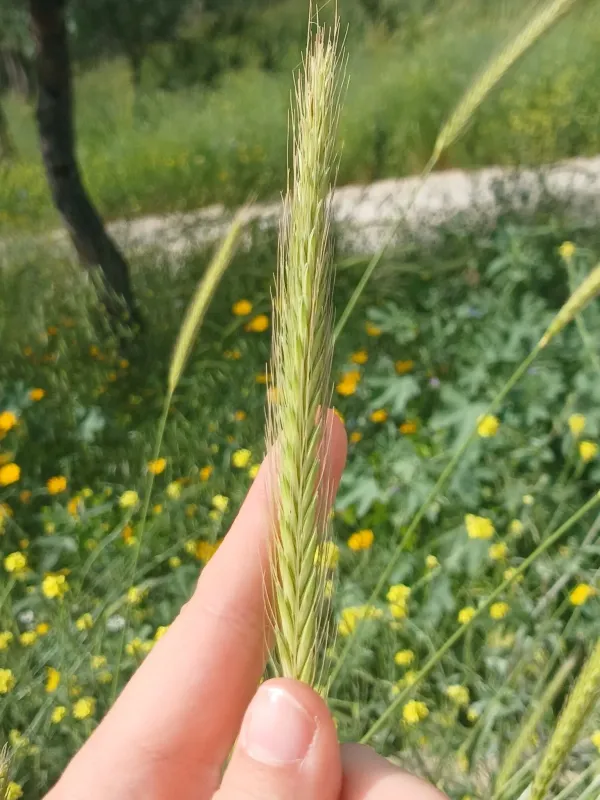
Bulbous barley (Hordeum bulbosum) is a perennial grass species belonging to the Poaceae family, distinguished by the bulb-like structures at the base of its stems.
Planting is typically performed in spring or autumn, depending on local climate conditions, ensuring that the seeds have adequate soil moisture for successful germination.
Seeds should be planted at a shallow depth of approximately 2-3 cm. The early growth phase is relatively slow, requiring clean field conditions to prevent weed competition.
Seeding rates depend on the intended use, usually ranging from 12 to 15 kg per hectare, ensuring a sufficient plant density for a stable perennial sward.
Early establishment is critical; therefore, the seedbed must be well-prepared to provide optimal contact between the soil and the seed for rapid root development.
Growing requirements
This species thrives in well-drained loamy soils and is known for its remarkable ability to tolerate dry conditions due to its specialized root system.
The bulbous base acts as a nutrient storage organ, allowing the plant to survive extended drought periods, making it highly valuable in semi-arid regions.
It prefers sunny locations and exhibits high growth rates when temperatures are moderate, typically between 15 and 22 degrees Celsius throughout the growing season.
Adequate nitrogen supply is essential for promoting secondary growth after grazing or harvesting, as the plant responds vigorously to soil fertility improvements.
Avoiding waterlogging is critical for the survival of the bulbous structures, which can rot if exposed to persistent, excessive moisture in the root zone.
Yield
Bulbous barley is primarily utilized as a high-quality forage crop, providing nutritious green mass for livestock during periods when other grasses are dormant.
The biomass production is consistent across several cuttings per season, provided that moisture levels are managed properly during the peak vegetative phases.
Nutritional analysis shows high protein content, making it an excellent component for pasture mixes intended for cattle, sheep, and other grazing livestock.
Its ability to remain green during the summer heat makes it an essential resource for grazing, significantly improving the sustainability of pasture-based livestock systems.
Research into this species often focuses on its genetic potential for hybridization with common barley to impart drought resistance to cereal crops.
Main diseases and pests
The species is susceptible to various fungal pathogens common in grasses, such as powdery mildew and rust, which can reduce foliage quality if unchecked.
Insects like cereal flies and aphids can cause damage to seedlings, potentially impacting stand density during the first year of growth in the field.
Root rot diseases present a significant risk, particularly in fields with poor drainage or during exceptionally wet winter seasons, affecting the bulb survival.
Integrated pest management strategies, including crop rotation and the use of resistant varieties, are recommended to maintain healthy pasture stands.
- Regular inspection for signs of fungal rust.
- Application of approved fungicides when necessary.
- Ensuring proper drainage to prevent root diseases.
Harvesting
Harvesting for hay should ideally take place during the early heading stage, ensuring the best balance between biomass volume and nutritional quality.
For silage production, the crop is chopped at a stage that allows for effective fermentation, maintaining the high protein value of the material.
Seed harvesting requires attention to the maturity of the spikes, as seeds can be prone to shattering if harvesting is delayed beyond the optimal window.
Post-harvest management is important for the longevity of the stand; a light fertilization application can support the plant's recovery before winter dormancy.
Proper grazing management prevents over-utilization, allowing the bulbs to replenish their carbohydrate reserves, which is essential for the plant's survival into the following season.