
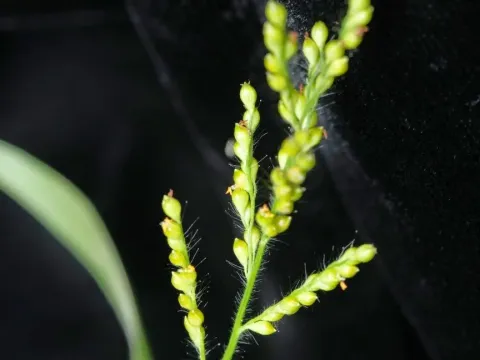
Panicum fasciculatum
Panicum fasciculatum
Panicum fasciculatum is a warm-season crop that requires well-warmed soil for successful germination. Sowing should only occur once soil temperatures consistently exceed 12 to 15 degrees Celsius to prevent seed dormancy and ensure uniform emergence.
What the section contains
Panicum fasciculatum
The preparation of the seedbed is essential for this species. A fine-textured soil structure allows for optimal contact between the soil particles and the seeds, which is necessary for moisture uptake and rapid initial root development.
The recommended planting depth ranges between 2 and 4 centimeters. Planting too deep can prevent seedlings from reaching the surface, while planting too shallow increases the risk of dehydration for the germinating seeds in arid climates.
Row spacing should be managed to balance the plant's need for space with the necessity of shading the ground to suppress weeds. Narrow row patterns are often preferred in high-fertility soils to maximize ground coverage as early as possible.
Post-sowing compaction is a standard agronomic practice to improve capillary water flow to the seed. Using a roller after planting ensures that the soil is firm, leading to more predictable and uniform seedling stands.
As a member of the Poaceae family, Panicum fasciculatum is noted for its resilience and ability to thrive in diverse environments. It requires significant solar radiation and is best suited for sunny locations where photosynthesis can proceed without limitation.
The crop prefers well-drained soils, such as sandy loams or light clay soils. It is highly sensitive to waterlogging, which can cause root asphyxiation and create an environment conducive to soil-borne pathogens and root rot.
Nutrient management should focus on providing adequate nitrogen during the early vegetative stages to support foliage growth. Potassium applications are also beneficial for building physiological resistance to environmental stresses such as drought.
The soil pH should ideally be neutral or slightly acidic. If the soil is excessively acidic, amendments like lime should be incorporated into the soil during land preparation to optimize nutrient availability and microbial activity.
- Requires high temperatures for optimal physiological function.
- Good tolerance to moderate moisture fluctuations once established.
- High demand for balanced micronutrient availability in the soil.
Fungal diseases, specifically those causing smut and rust, are primary threats during seasons with high humidity or rainfall. Fungicidal seed treatment and resistant cultivar selection are the most effective management tools for these conditions.
Insect pests, including cereal flies and aphids, can significantly impact crop vitality. Aphids, in particular, act as vectors for various plant viruses, necessitating regular monitoring and timely application of targeted insecticides.
Wireworms can be particularly destructive during the germination phase by feeding on the newly developed roots. Soil-applied insecticides or seed coatings are standard practices used to protect seedlings from subterranean damage.
Birds represent a constant pressure during the grain filling and maturation stages. In large agricultural landscapes, integrated pest management including acoustic deterrents and visual scarers are utilized to minimize grain losses at harvest time.
Weed competition during the early growth phase can severely reduce the yield potential of Panicum fasciculatum. Integrated weed management, including mechanical cultivation between rows, is necessary to ensure the crop establishes dominance over invasive flora.