
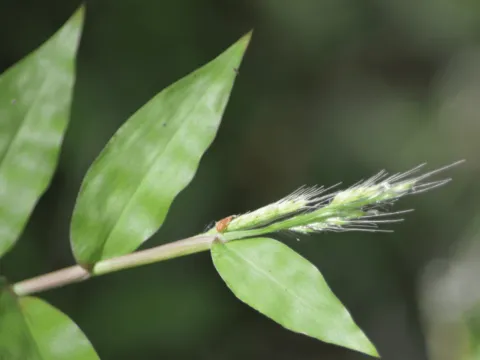
Burmann's basketgrass
Oplismenus burmannii
Burmann's basketgrass, belonging to the Poaceae family, is a versatile tropical annual grass known for its rapid growth rate and strong rooting ability at the stem nodes. It is highly valued for its ability to provide quick ground cover.
What the section contains
Burmann's basketgrass
Sowing should be timed with the onset of the rainy season to ensure optimal soil temperature and moisture levels. Seeds generally require temperatures above 20 degrees Celsius to initiate germination, making soil warmth a primary factor for success.
A row-seeding method is recommended to maintain uniform spacing, which prevents overcrowding while ensuring maximum utilization of the area. Seeds should be sown shallowly due to their small size, ensuring they are adequately covered to prevent drying out.
Moisture management during the first two weeks is critical for establishing a dense stand. Once established, the plant develops a vigorous root system that allows it to tolerate mild dry spells, although it performs best with regular moisture.
The crop is highly regenerative, and its ability to spread via creeping stems makes it an excellent choice for stabilizing soil on slightly inclined sites while providing a steady supply of biomass.
The plant thrives in well-drained, fertile loam soils with a neutral pH level. While it shows some adaptability, it performs best in soils rich in organic matter that support high nutrient availability throughout the growth cycle.
Burmann's basketgrass prefers full sun but demonstrates remarkable shade tolerance, allowing it to be cultivated in orchards or agroforestry settings where light levels are reduced by tree canopy cover.
Temperature requirements are strict, as the plant is strictly tropical and cannot survive frost. Optimal development occurs in temperatures ranging from 25 to 32 degrees Celsius, where metabolism and growth rates reach their peak.
Regular fertilization, particularly with nitrogen-rich compounds, is essential for maintaining biomass productivity. Potash and phosphorus should be applied during the early vegetative stage to support healthy root and stem development.
In regions with fluctuating rainfall, irrigation systems are necessary to maintain continuous growth. High water availability directly correlates with the number of possible cuttings per season and overall forage quality.
Primarily used as a fodder crop, Burmann's basketgrass is appreciated for its palatability and nutritional profile. Livestock, including cattle and goats, consume it readily, benefiting from its high crude protein content.
Yields are highly responsive to intensive management. With proper hydration and nutrient application, the plant can produce multiple cuts per season, providing a reliable feed source throughout the tropical growing window.
Harvesting for hay should occur just before flowering. Delaying the harvest leads to the lignification of stems, which significantly reduces the digestibility and overall nutritional value of the harvested fodder.
Beyond its feed value, the species is effectively used as a cover crop. Its dense, mat-forming habit provides excellent protection against soil erosion, helping to preserve topsoil in heavy rainfall environments.
- High biomass production rate.
- Excellent adaptability to shade.
- Effective soil erosion prevention.
- Good regrowth potential after grazing.
Fungal diseases, such as leaf rust, pose the most significant risk during periods of high humidity and poor airflow. Managing density is the most effective preventative measure against these outbreaks.
Pests like aphids and certain caterpillars can cause defoliation if left unchecked. Early detection through regular field scouting allows for targeted interventions, minimizing the need for broad-spectrum pesticides.
Weed competition during the seedling stage is a primary challenge. Once the basketgrass closes the canopy, its growth is so aggressive that it generally suppresses most competing weeds naturally.
Root-knot nematodes can become a problem in fields with repetitive monoculture. Implementing a strict crop rotation cycle is essential to interrupt the pest life cycle and maintain soil health over the long term.
Rodents may utilize the dense vegetation mats as nesting sites. Keeping fields well-managed and practicing timely harvests helps to mitigate the attractiveness of the site to various vertebrate pests.