
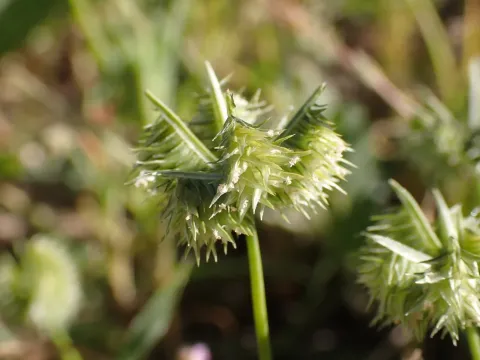
Button grass
Dactyloctenium radulans
Button grass (Dactyloctenium radulans) is an annual grass belonging to the Poaceae family. Native to the arid and semi-arid regions of Australia and parts of Africa, it is highly valued for its exceptional survival capacity in harsh, water-scarce environments.
What the section contains
Button grass
The plant demonstrates significant soil adaptability, thriving in sandy, loamy, and even compacted soils where other forage crops struggle to establish. Its root system is designed to capture moisture efficiently, allowing it to withstand prolonged dry spells and high temperatures.
Botanically, it is recognized by its unique button-like, finger-shaped flower spikes. The plant grows in a prostrate or ascending habit, effectively covering the ground and providing a vital resource for grazing livestock in remote areas.
Agricultural usage is primarily focused on extensive grazing systems. It provides nutritious forage during its growth phase and is highly palatable to cattle and sheep, often serving as a primary component of natural pasture systems in rangelands.
In terms of agricultural management, button grass requires minimal input. It relies on natural seed dispersal to maintain pasture density. Farmers prioritize protecting the plant from overgrazing during its seed-setting stage to ensure the sustainability of the pasture for the following year.
The main threats to button grass arise from environmental stressors rather than pathogens. Excessive moisture, such as prolonged flooding, can inhibit growth and promote root rot, as the plant is specifically adapted to drier conditions.
Pests such as grasshoppers and certain types of caterpillars may feed on the foliage during the peak growing season. However, due to its rapid regeneration rate and adaptation to poor conditions, the plant is generally resilient and does not require intensive chemical pest control measures.