
Bushy bluestem
Andropogon glomeratus
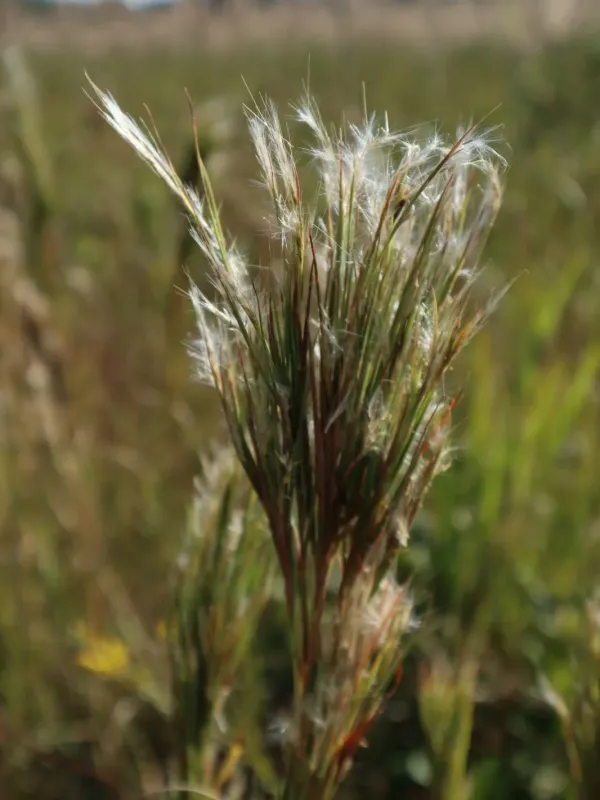
Description
Sowing dates
Seeding of bushy bluestem should occur in the spring when soil temperatures reach 15–18 degrees Celsius. This ensures optimal germination rates and early root establishment.
Seeds should be planted at a shallow depth, approximately 1 to 2 centimeters. Because the seeds are very small, precise placement is crucial to prevent failure due to drying of the topsoil.
Standard row seeding is the most common method, allowing for mechanical weed control during the establishment phase. Seeding rates should be adjusted based on soil fertility.
Seedlings typically emerge within two to three weeks under favorable moisture conditions. Slow initial growth is typical, making weed management essential during the first months.
Late autumn or dormant seeding can be practiced in specific climates, provided the site is well-drained and not subject to severe freezing-thaw cycles that might heave seeds.
Growing requirements
Bushy bluestem (Andropogon glomeratus) is a perennial member of the Poaceae family, known for its deep root system and ability to colonize various habitats.
It thrives in moist environments, including wet meadows, floodplains, and ditch banks. It is highly tolerant of periodic waterlogging and poor soil aeration.
While the plant adapts to a range of soil types, it prefers slightly acidic to neutral soils with adequate organic matter to support vigorous growth.
The climate requirement involves a long, warm growing season. It is a heliophytic plant, meaning it requires full sun exposure to produce maximum biomass.
Nitrogen fertilization significantly increases biomass production. Managing nutrient levels is key to maintaining a highly productive stand for forage purposes.
Yield
The forage yield of bushy bluestem depends heavily on moisture availability and nitrogen supplementation. When managed properly, it provides a reliable source of green biomass.
The grass is capable of producing multiple cuttings per season. Its ability to regrow rapidly after harvest makes it a useful component in mixed forage systems.
The nutritional profile includes high levels of fiber, which is important for ruminant digestion, though protein levels decline significantly after the flowering stage.
Regular harvesting prevents the plant from becoming too stemmy. Optimal nutritive value is found during the vegetative stage, prior to full bloom.
Longevity of a productive stand is typically five years or more. Sustainable harvesting practices ensure the plant maintains its vigor and crown health over time.
Main diseases and pests
Common diseases affecting this grass include various rusts and leaf spot fungi, especially in areas with poor air circulation or extended periods of high humidity.
Pests such as grass bugs and larvae can damage leaves and stems. Integrated pest management should focus on maintaining a healthy, vigorous stand to outcompete infestations.
Weed competition is the greatest threat during the establishment phase. Using pre-emergent strategies or mechanical cultivation helps young grasses compete.
Proper drainage management can mitigate fungal issues. Keeping the field clean of plant debris after the final harvest helps reduce the pathogen load for the next season.
Chemical control should be limited and targeted. Always ensure that any pesticides used are approved for use on forage crops to avoid toxicity risks for livestock.
Harvesting
Harvesting for hay should be timed to coincide with the early booting or beginning of the heading stage to achieve the best trade-off between volume and quality.
Rapid curing is essential for hay quality. Turning the cut material helps preserve the nutritional integrity of the leaves, which are the most valuable part of the plant.
Grazing management should involve rotational patterns. Overgrazing can deplete the root reserves of the plant and reduce its long-term survival in the pasture.
Seed harvesting should occur when the characteristic bushy inflorescences turn straw-colored and seeds are fully mature to ensure viability.
Post-harvest residues, if left, serve as excellent soil protection. If collected, they can be utilized as bio-mulch or bedding material due to their durability.