
California needlegrass
Stipa californica
Description
Growing requirements
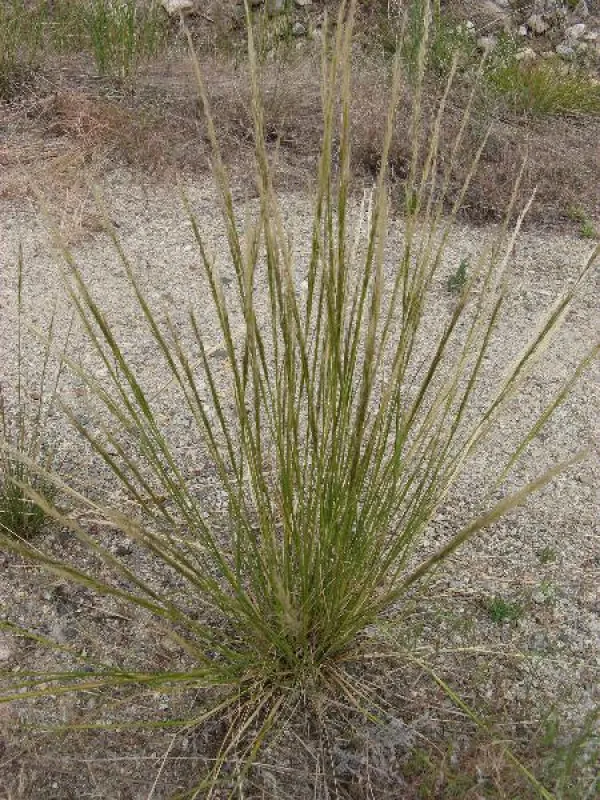
California needlegrass (Stipa californica) is a perennial bunchgrass belonging to the Poaceae family. It is recognized for its dense, upright growth habit, making it a prominent feature of the native grasslands of its geographical origin.
The species is indigenous to Western North America, particularly in California. It thrives in open, sunny habitats and is specifically adapted to environments that experience dry summers and cold, wet winters, reflecting its natural resilience.
Soil requirements for this crop involve a preference for well-drained, porous soils. It is highly intolerant of waterlogged conditions, which can cause crown rot and negatively affect the overall longevity of the perennial clumps.
As a drought-tolerant species, California needlegrass utilizes its deep-reaching root system to extract moisture from lower soil horizons. This physiological trait allows it to remain productive in conditions where rainfall is infrequent or unpredictable.
The plant requires full sun exposure to maintain its structural integrity and reproductive capacity. Adequate ventilation is also essential, as it helps prevent the buildup of humidity around the base of the plant, which is crucial for disease prevention.
Harvesting
Economically, California needlegrass is primarily utilized as a forage component for livestock, especially in rangelands where water availability is a limiting factor for more conventional, water-demanding grass species.
In landscaping, this species is highly valued for its aesthetic appeal. Its delicate, needle-like foliage and graceful inflorescences make it a popular choice for water-wise gardens and native plant restorations aimed at biodiversity preservation.
Harvesting for hay should be managed carefully to ensure optimal nutrient quality. Cutting the grass before it enters the reproductive stage ensures a higher protein content and digestibility for grazing animals.
The plant is extensively used in erosion control projects. Due to its dense root architecture, it is effective in stabilizing loose soil on slopes and disturbed lands, serving as a cornerstone for successful ecological restoration efforts.
Seed harvesting is conducted when the inflorescences show signs of maturity, typically indicated by a change in color. Proper handling is required to minimize losses, as the seeds have a tendency to shatter and disperse easily once they are fully ripe.