
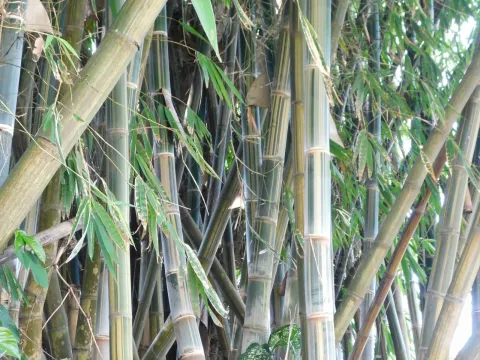
Gigantochloa
Gigantochloa
Gigantochloa is a genus of large tropical bamboos within the Poaceae family. Cultivation is primarily achieved through vegetative propagation, as seed production in this genus is rare and infrequent due to long flowering cycles.
What the section contains


Gigantochloa
Planting is best performed at the onset of the rainy season to ensure sufficient moisture for the root system to establish itself. Cuttings should ideally be taken from healthy, mature culms that feature vigorous buds and nodes.
Site preparation involves clearing vegetation and digging deep pits to accommodate the root ball. Adding organic compost to each hole provides the necessary nutrients to support the initial, rapid growth phase of the bamboo.
Spacing is critical for long-term health; typical layouts range from 5x5 meters to 7x7 meters, depending on the specific species and desired final use. Correct spacing ensures adequate airflow, reducing the risk of pest infestations.
After planting, the establishment phase requires consistent monitoring of water levels. While established bamboo is resilient, young plants must be protected from drought and intense heat during their first year in the field.
Gigantochloa thrives in humid, tropical climates where temperatures remain consistently above 20 degrees Celsius. Exposure to frost is detrimental and can lead to the rapid decline of entire plantations.
Well-drained, fertile loamy soils are ideal for these species. They are intolerant of waterlogged conditions, which promote rhizome rot and restrict growth. Proper drainage systems are essential on flat or clay-heavy terrain.
High annual rainfall, typically exceeding 2000 mm, is preferred. In areas with a distinct dry season, irrigation is necessary to maintain the fast growth rate and structural integrity of the developing culms.
The plant requires significant sunlight to photosynthesize effectively and produce dense timber. Full exposure to sun ensures the development of the rigid, woody walls for which Gigantochloa is valued commercially.
Soil nutrient management involves regular applications of nitrogen-rich fertilizers to boost biomass production. Maintaining a balanced soil pH, ideally between 6.0 and 7.0, is crucial for optimal nutrient uptake.
The yield of Gigantochloa is exceptionally high, making it a sustainable source of raw material. Once the plantation reaches maturity, usually after 5 to 7 years, it provides a consistent annual harvest.
Sustainable harvesting involves removing only mature, 3 to 4-year-old culms, which allows the plant to continue growing indefinitely. This method maintains the stability of the root network and ensures long-term productivity.
In well-managed plantations, yields can reach 30 to 50 metric tons of raw bamboo per hectare annually. This high output supports various industries, including construction, flooring, and furniture manufacturing.
The structural quality of the culms depends on age and species. Precise harvesting timing is necessary to ensure the material has achieved its maximum strength and minimum sugar content, which reduces pest attractiveness.
Continuous regeneration means that farmers do not need to replant frequently. A healthy stand of Gigantochloa can remain productive for several decades, providing a steady stream of income and environmental benefits.
The primary biological threats to Gigantochloa include wood-boring insects, particularly powder-post beetles, which target the stored sugars in the culms. Effective post-harvest treatment is essential for protection.
Fungal diseases like leaf blight and stem rot can emerge under conditions of high humidity and poor ventilation. Keeping the stand clear of debris and thinning older stems helps mitigate these risks significantly.
Small mammals and rodents may occasionally damage young, tender shoots. Fencing or protective guards around the base of young clumps can be effective in preventing such damage during the establishment period.
Environmental stress, such as strong cyclonic winds, can cause breakage or lodging in mature clumps. Designing the plantation with windbreaks and maintaining correct density can prevent catastrophic damage.
Integrated Pest Management (IPM) strategies, which include monitoring and biological controls, are highly recommended. These practices minimize the need for chemical interventions and protect the local ecosystem.
Harvesting is typically done manually, using sharp tools to ensure clean, level cuts near the base. Cutting too high leaves stumps that can trap water and cause decay, whereas cutting too low risks damaging the rhizomes.
After removal, the culms are immediately stripped of lateral branches and leaves. This facilitates handling and transport, and also prevents the loss of moisture through the foliage, maintaining the quality of the timber.
Post-harvest treatment often includes soaking the bamboo in preservative solutions or using thermal treatment (boiling/steaming) to remove starches. This process is crucial to make the material resistant to insects and fungi.
Sorting by diameter and length is an important part of the harvest workflow. This allows the producer to categorize the material for different market segments, such as structural poles or raw material for processed goods.
Efficient logistics are essential for moving the heavy, bulky material from the plantation to processing centers. Proper planning during the harvest season ensures that the bamboo is processed before it begins to degrade.