
Remote bluegrass
Poa remota
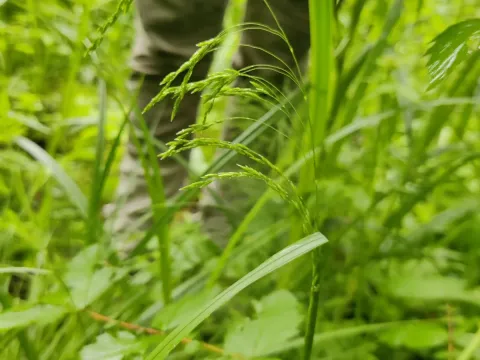
Remote bluegrass (Poa remota) is a perennial grass species within the Poaceae family. It is a highly specialized plant that thrives primarily in damp habitats, distinguishing itself from other more drought-tolerant bluegrass species.
What the section contains
Remote bluegrass
Its natural range extends across temperate forest zones of Europe and Asia. The species typically occupies niches along forest streams, in wet meadows, and in riparian zones where water availability is consistent throughout the growing season.
Botanically, this grass grows in loose tufts, exhibiting slender, elongated culms and narrow, soft leaves. The root system is specifically adapted to waterlogged soils, allowing the plant to remain anchored in riparian environments.
Regarding cultivation requirements, the species demands high soil moisture and rich organic content. It is unsuitable for well-drained, sandy, or upland conditions, as these quickly lead to physiological stress and reduced biomass production.
In agricultural settings, Poa remota is recognized for its utility in grazing mixtures intended for swampy or flood-prone fields. It serves as a resilient fodder grass that can endure periodic saturation that would typically kill other pasture species.
The primary pathological threats to this grass include rust fungi (Puccinia spp.) and powdery mildew, which thrive in the humid microclimates characteristic of the wetland areas where this species grows.
Common insect pests include aphids and various grass-feeding larvae that target the stems and foliage. Integrated pest management in these habitats often focuses on maintaining balanced soil fertility and proper grazing pressure.