
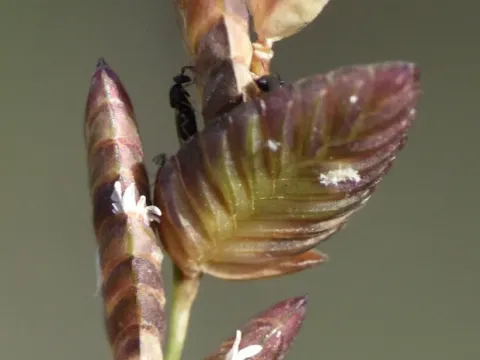
Eragrostis capensis
Eragrostis capensis
Eragrostis capensis is a perennial grass species belonging to the Poaceae family. Native to the southern regions of Africa, this plant has adapted to thrive in varied environmental conditions, primarily within open grasslands and rocky outcrops.
What the section contains
Eragrostis capensis
The plant is highly valued for its remarkable drought tolerance. Its root system is deep and expansive, allowing the plant to extract moisture from deeper soil horizons even during prolonged periods of low precipitation, making it ideal for arid regions.
Regarding soil requirements, Eragrostis capensis prefers well-drained sandy or loamy soils. It demonstrates a high degree of tolerance to nutrient-poor soils, which simplifies maintenance efforts in large-scale grazing areas where fertilization is limited.
Agronomic management involves selecting sites with full sun exposure, as the species is intolerant of shade. Proper establishment of the crop requires initial weed suppression to ensure the grass can develop a dense canopy that eventually outcompetes invasive species.
The primary agricultural use of Eragrostis capensis is as a forage source for livestock. It provides a reliable supply of biomass for both grazing and hay production, contributing to the sustainability of pasture management systems in its region of cultivation.
Disease pressure in Eragrostis capensis is generally low, but excessive humidity may occasionally trigger leaf spot diseases caused by various fungal pathogens during the active growing season.
Insect pests, such as aphids and grass-feeding larvae, represent the most common threat. Integrated pest management strategies, focusing on biological controls and proper site management, are essential to maintain forage quality.