
Eragrostis coarctata
Eragrostis coarctata
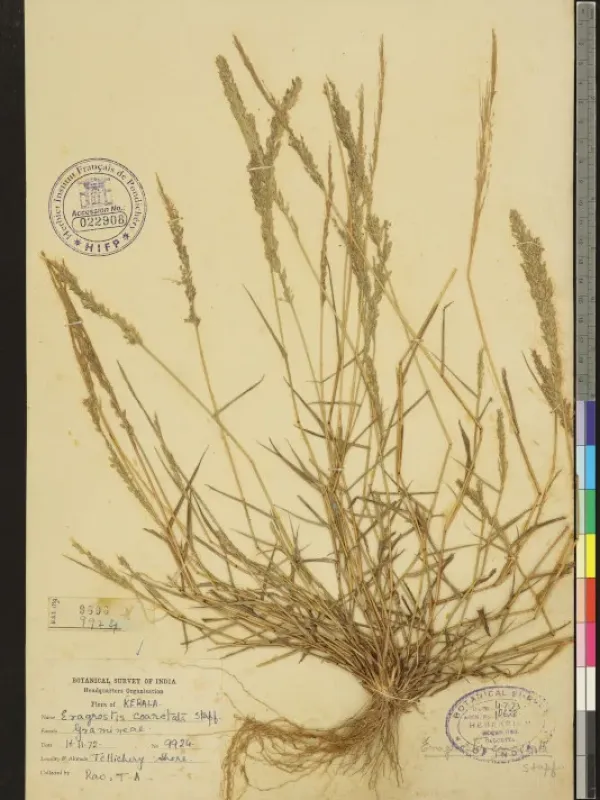
Description
Growing requirements
Eragrostis coarctata is a perennial grass species belonging to the Poaceae family. Known for its resilience, this plant is specifically adapted to environments where standard agricultural crops often struggle due to harsh environmental conditions or poor soil quality.
The plant thrives primarily in sandy or loamy soils that possess excellent drainage characteristics. It is highly valued for its ability to tolerate nutrient-poor substrates, making it an excellent candidate for land reclamation and restoration projects in arid zones.
Climate requirements for this species are centered around its need for ample sunlight and heat. It is a drought-tolerant grass that can maintain metabolic activity during prolonged dry spells, which are typical in its native growing regions throughout the seasonal cycle.
Agronomic management involves minimal soil cultivation to protect the integrity of the root zone. Since the plant is naturally adapted to its environment, the primary management focus remains on regulating grazing intensity and preventing excessive soil compaction by livestock.
The main agricultural use of Eragrostis coarctata is in forage production for grazing systems and soil stabilization efforts. Its deep and extensive root network plays a critical role in preventing wind erosion, making it a key species for land conservation strategies.
Main diseases and pests
This species displays a high level of natural resistance to common pathogens affecting other forage grasses. Problems typically arise only under conditions of severe waterlogging or improper management, which can lead to fungal issues within the crown area of the grass.
Pests are generally not a significant threat to established stands of Eragrostis coarctata. Occasional insect infestations may occur during seasonal transitions, but they rarely reach economic threshold levels that would necessitate the application of chemical pesticides.