
Turner's millet
Echinochloa turneriana
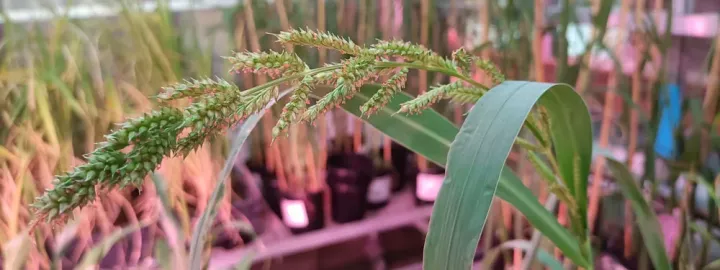
Description
Sowing dates
Sowing of Turner's millet should be conducted when soil temperatures are consistently warm, which coincides with the onset of the wet season in its native Australian habitats. This timing ensures rapid germination and establishment.
Due to the small size of the seeds, they must be sown at a shallow depth. Proper seedbed preparation, including fine-tilth cultivation, is essential to maximize the percentage of seedling emergence across the field.
Modern precision planters are recommended to maintain an optimal seeding rate. This approach minimizes seed waste and ensures an even stand, which is vital for the crop's competitive ability against weeds.
In regions with unpredictable rainfall, irrigation can be used to trigger germination. Once established, the root system develops rapidly, allowing the plant to reach deep soil moisture reserves.
Sowing density should be tailored to the intended use. Higher densities are preferred for green forage production, whereas lower densities are often sufficient for seed multiplication plots.
Growing requirements
Turner's millet, known scientifically as Echinochloa turneriana, belongs to the Poaceae family. It is a robust annual grass adapted to the arid and semi-arid regions of inland Australia.
The plant thrives in heavy clay soils that are capable of holding significant amounts of water following seasonal flooding. It possesses a remarkable tolerance for temporary anaerobic conditions in the root zone.
As a C4 grass, Turner's millet requires high levels of solar radiation and warm temperatures for optimal growth. It is most productive during the peak of summer when metabolic rates are highest.
It displays notable salt tolerance, allowing for cultivation on saline lands where other cereal crops might fail. This makes it an ideal candidate for restoring degraded agricultural soils.
While known for its drought resilience, the crop reaches maximum biomass production when water is available during the active vegetative stage. It efficiently utilizes moisture through its specialized physiology.
Yield
The biomass yield of Turner's millet is significantly high, making it a valuable forage resource. Its ability to regrow after grazing or cutting allows for multiple harvests within a single season.
Nitrogen fertilization dramatically improves the forage quality and volume. The plant shows a rapid response to nutrient availability, which is characteristic of highly productive annual grasses.
The nutritional value is greatest during the early vegetative stages before the development of reproductive structures. Proper timing of harvest is critical to maintaining high protein and energy levels.
Seed yields are generally consistent, even in years with lower rainfall. The large, well-developed panicles provide a reliable source of seed for future planting or potential use as feed grain.
Economic viability is supported by the low input requirements for pest and weed management, as the crop's fast growth quickly shades out competing vegetation in the field.
Main diseases and pests
Pests such as aphids and various caterpillar species may cause foliage damage during hot, dry spells. Regular crop monitoring is recommended to intervene when damage thresholds are exceeded.
Fungal diseases, including leaf spots and rusts, can occur in environments with high humidity or poor field drainage. Ensuring proper plant spacing can help improve air circulation and reduce risks.
Weed competition is mainly a concern during the first few weeks after sowing. Once the plants reach a height of approximately 30 cm, they become highly competitive and typically suppress weeds.
Root rot can be a localized issue in fields that remain waterlogged for too long. Improving soil drainage or adjusting the frequency of irrigation can mitigate these soil-borne threats.
Integrated pest management, including crop rotation with non-host species, is the best strategy to prevent the buildup of soil-borne pathogens or specific insect populations.
Harvesting
Forage harvesting should be scheduled before the plants reach the flowering stage. Cutting at a height of 10 to 15 cm encourages vigorous regrowth from the basal nodes of the stems.
When producing hay, the crop requires thorough drying due to its dense stems and leaves. Tedding the cut material is essential to speed up the moisture loss and ensure a high-quality final product.
Silage production is an excellent way to store Turner's millet, as the plant's natural sugar content facilitates effective fermentation. Properly compacted silage maintains nutritional value for months.
Seed harvest is performed using combine harvesters when the panicles turn a characteristic brown color. Operators must carefully adjust combine settings to minimize seed cracking and loss.
Post-harvest residues can be left on the field to provide soil cover, which helps in preventing wind and water erosion while conserving soil moisture for the subsequent season.