
Peacock grass
Echinochloa crus-pavonis
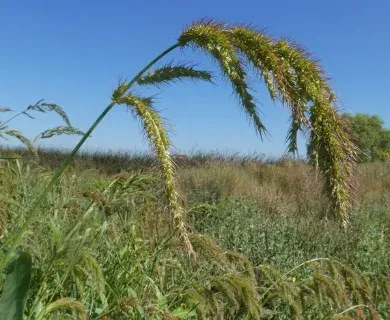
Description
Sowing dates
Peacock grass (Echinochloa crus-pavonis) is an annual herbaceous plant belonging to the Poaceae family. Originating from tropical and subtropical regions of the Americas, this crop has adapted well to warm climates across the globe, making it a valuable plant for specific agricultural niches.
The sowing time is strictly determined by soil temperature. To ensure successful germination, the soil at a depth of 5-10 cm should be consistently warmed to at least 15-18 degrees Celsius. Planting in colder soil leads to poor emergence and weak initial growth.
The optimal planting window is in late spring, once the risk of frost has completely passed. In many agricultural zones, this aligns with the mid-to-late May period, allowing the plant to utilize the full duration of the warm growing season for optimal biomass production.
Sowing rates should be adjusted based on whether the crop is grown for forage, hay, or grain production. Typically, a row-spacing method of 15-20 cm is used to provide each individual plant with sufficient space and nutrients for healthy development.
Rolling the soil immediately after seeding is a crucial agronomic practice for Peacock grass. This step ensures proper contact between the seeds and the soil, allowing the plant to rapidly access soil moisture, which is vital for achieving high-quality, uniform stands.
Growing requirements
This crop is highly demanding of moisture, especially during the early stages of its vegetative growth. Peacock grass is known for its high tolerance to temporary waterlogging, making it an excellent choice for low-lying fields or areas with high groundwater levels.
Peacock grass thrives best in fertile loam or alluvial soils found along river valleys. While the plant shows some adaptability to various soil pH levels, it reaches peak productivity in neutral to slightly acidic soils, which facilitate better uptake of essential micronutrients.
High light intensity is essential for the crop's vegetative development. Shaded conditions lead to stem elongation and reduced structural integrity, significantly increasing the risk of lodging, which complicates mechanical harvesting and reduces yield efficiency.
A stable, high-temperature environment is necessary throughout the growing season. The plant performs exceptionally well at temperatures between 22 and 30 degrees Celsius, showcasing high heat tolerance, which is a major advantage in arid or tropical agricultural zones.
Proper weed management is essential during the first few weeks of growth when the plant is establishing its root system. Integrated weed control methods, including timely mechanical cultivation or the use of approved herbicides, are necessary to prevent competition.
Yield
The yield of green biomass depends significantly on the intensity of nitrogen fertilization and the overall management of the field. Given the right inputs, Peacock grass is capable of producing a large volume of nutritious biomass within a very short growth cycle.
Under optimal conditions, yields for green biomass can range from 250 to 350 quintals per hectare. If supplemental irrigation is provided during dry spells, the productivity potential can be even higher, making it a highly profitable crop for intensive livestock systems.
Seed yield varies depending on the length of the growing season and heat accumulation. In regions with long, warm summers, the plant can produce a consistent yield of seeds, which serve as a viable secondary product for farm-level use or as animal feed.
Plant density management is key to maximizing yields. Over-seeding leads to intense competition for light and soil moisture, which ultimately reduces the biomass quality and lowers the overall output per hectare when the crop is finally harvested.
The energy value of the harvest is determined by the nutritional profile of the plant. High-quality hay made from this grass preserves essential proteins and sugars, which are critical for maintaining livestock health during the winter months when pasture availability is limited.
Main diseases and pests
Peacock grass is susceptible to several fungal diseases common to the grass family, such as leaf rust and helminthosporium leaf spot. These pathogens are particularly prevalent in fields with poor ventilation and high humidity, which favor fungal spore development.
Common pests, including grass aphids and cereal flies, can pose a serious threat to young seedlings. They feed on plant sap, leading to distorted leaf growth and significant stunting of the plants if an infestation is not addressed promptly with control measures.
Crop rotation is the most effective preventative measure against disease outbreaks. Avoiding continuous monoculture of grasses helps break the lifecycle of soil-borne pathogens and ensures that the field remains productive over multiple agricultural seasons.
High soil moisture levels combined with cool weather can trigger root rot in the crop. To minimize this risk, it is important to ensure good field drainage and avoid over-irrigation, especially during the initial stages of the plant's development.
Regular field scouting is highly recommended to identify signs of stress, pest damage, or disease. When necessary, the use of registered fungicides and insecticides should be applied according to local agricultural regulations to protect the health of the crop.
Harvesting
Harvesting for green forage is ideally performed during the booting or early heading phase. At this stage, the plant has the best balance of protein, sugars, and fiber, ensuring it provides high-quality nutrition for cattle and other ruminants.
For silage production, the crop should be mowed during the milk-to-dough stage of grain development. This timing ensures that the biomass has sufficient sugar content for proper fermentation and an optimal moisture level, facilitating easy processing and storage.
When producing grain, harvesting must occur at full physiological maturity when the seeds are fully developed. A combine harvester should be used, with the settings adjusted to ensure the grain is collected cleanly without mechanical damage to the seed coat.
Post-harvest handling is critical for maintaining seed quality. The harvested grain must be cleaned to remove all plant debris and weed seeds, which can otherwise harbor fungi and cause spoilage during the storage period in silos or granaries.
Drying the grain down to a moisture content of 12-14% is necessary for long-term preservation. Proper ventilation in storage facilities prevents the growth of mold and ensures that the seed maintains its viability for future planting or its value as livestock feed.