
Barnyard grass
Echinochloa oryzoides
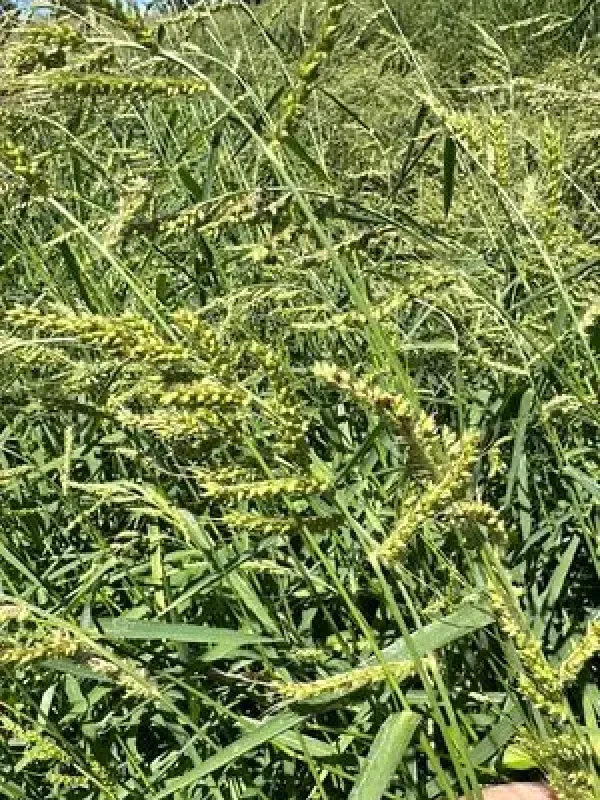
Description
Sowing dates
Echinochloa oryzoides, commonly known as barnyard grass, typically emerges alongside rice crops. Germination begins when soil temperatures reach 12-15°C, usually in early to mid-spring.
The seeds possess a high germination vigor, allowing them to emerge rapidly and compete with crops for nutrients and light. Seeds can germinate from depths of up to 5 cm under moist conditions.
In paddy fields, controlling the timing of emergence is critical. Farmers often employ stale seedbed techniques, where the field is prepared and watered to trigger germination before the crop is sown.
When cultivated intentionally, sowing is performed in well-prepared, warm soil. Proper spacing is essential to minimize intraspecific competition and ensure uniform biomass development.
The plant demonstrates a remarkable ability to produce multiple flushes of emergence, which necessitates systematic monitoring and potential repeated control measures throughout the early growing season.
Growing requirements
As a member of the Poaceae family, barnyard grass is highly adaptable to aquatic and semi-aquatic environments. It thrives in fertile, waterlogged soils typical of rice-growing regions.
The plant requires ample nitrogen for optimal growth and biomass production. It is highly tolerant of heavy clay soils that retain significant moisture during the vegetative phase.
Light intensity is a critical factor for development. While it tolerates various light conditions, full exposure significantly boosts the plant's growth rate and reproductive capacity.
Temperatures between 25°C and 30°C are ideal for the rapid development of the root system and foliage. The species shows resilience to fluctuating temperatures once established.
While tolerant of low oxygen levels in the soil after flooding, the plant performs best when the seedbed is adequately aerated during the germination period.
Yield
When managed for fodder, Echinochloa oryzoides can produce a high yield of vegetative biomass. Its nutritive value is highest during the early vegetative stages before flowering.
The yield potential is directly linked to soil fertility and irrigation management. Under optimal conditions, it provides a reliable source of green forage in regions with sufficient water.
As a contaminant in rice crops, it acts as a significant yield reducer, directly competing for space and resources, often leading to substantial crop losses if left unmanaged.
The seeds are highly productive; a single well-developed plant can produce tens of thousands of seeds, ensuring a persistent seed bank in the soil for future years.
Economic considerations involve weighing the benefits of its biomass against the costs of controlling it as a weed in other agricultural crops.
Main diseases and pests
Common pests include aphids, grass borers, and stem-mining insects. These pests can cause significant damage to the plant's structure and reduce overall biomass quality.
Fungal diseases like leaf spot and various smuts are prevalent in humid, crowded conditions. Management relies on maintaining optimal stand density and good field hygiene.
Nematode infestations can severely compromise the root system, leading to stunted growth and increased susceptibility to other biotic and abiotic stressors.
Chemical control remains difficult due to the botanical similarity to rice crops. Herbicide resistance is a growing concern, necessitating the use of integrated weed management strategies.
Biological control methods are being researched to identify natural predators that can effectively suppress population density without relying heavily on synthetic herbicides.
Harvesting
For forage production, harvesting must occur at the boot stage, prior to panicle emergence, to ensure maximum protein content and digestibility for livestock.
Standard mowing and baling techniques are employed. For silage production, the crop should be chopped to the appropriate length to facilitate efficient fermentation.
Harvesting for seed management in paddy fields usually involves mechanical removal or targeted herbicide application to ensure no viable seeds enter the soil bank.
Equipment cleaning between fields is essential to prevent the spread of weed seeds to new areas, as barnyard grass seeds are easily transported by machinery.
Post-harvest soil management, such as deep tilling, helps bury any dropped seeds, effectively reducing the pressure for the following growing season.