
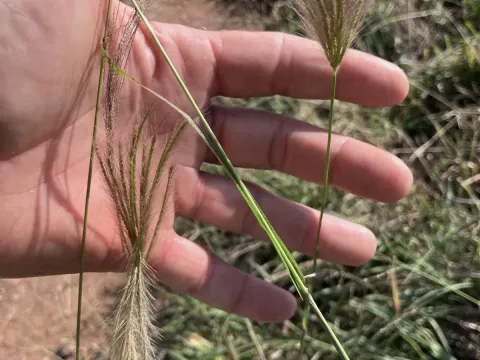
Chloris roxburghiana
Chloris roxburghiana
Sowing should ideally occur at the beginning of the rainy season when soil moisture is sufficient to support germination. Seeds should be planted at a shallow depth of 1–2 cm to ensure optimal contact with the soil.
What the section contains
Chloris roxburghiana
The seeding rate must be calculated based on the germination rate of the specific seed batch and the chosen sowing method, whether row-based or broadcast. Row planting typically requires 30–50 cm spacing to provide adequate room for plant growth.
To improve uniformity during distribution, seeds are often mixed with inert materials like sand. This is essential when using mechanical seeders in field settings.
After sowing, light rolling of the field is recommended to press seeds into the soil, preventing desiccation during the early developmental stages.
Successful establishment relies heavily on weed control during the first 30–45 days, as the seedlings are susceptible to competition for light and water.
Chloris roxburghiana belongs to the Poaceae family and is native to African savannas, making it naturally adapted to harsh environmental conditions. The crop displays exceptional tolerance to high temperatures and prolonged drought.
The grass is not demanding regarding soil fertility and thrives even in poor, sandy, or loamy soils. It prefers well-drained conditions and does not tolerate waterlogging in the root zone.
The ideal pH range for this crop is slightly acidic to neutral. While it shows moderate tolerance to salinity, extreme soil conditions can limit its development.
Chloris roxburghiana requires full sun exposure and cannot compete well under the shade of taller vegetation. Intense sunlight is key to maximizing biomass accumulation and increasing sugar content.
A minimum annual rainfall of 400–600 mm is sufficient for normal growth. With proper grazing management, the plant recovers rapidly even after periods of minimal precipitation.
Yield potential of Chloris roxburghiana varies significantly based on rainfall and nitrogen availability. Under favorable conditions, the grass can support multiple cuts throughout the growing season.
As a hay crop, average yields range from 3 to 6 tons of dry matter per hectare annually. Nutritional quality is highest when harvested at the onset of the flowering phase.
To maximize yields, supplemental nitrogen fertilization is recommended after each grazing or mowing cycle to stimulate regrowth and tillering.
The crop is known for its fast growth rate, making it highly suitable for intensive livestock systems. Its rapid recovery allows for effective rotational grazing schedules.
While irrigation can potentially double the biomass yield, the economic feasibility of such an investment must be carefully evaluated for individual agricultural operations.
The primary threats include fungal diseases that flourish under high humidity and poor aeration. Prompt management, including adjusting grazing pressure, is necessary if signs of rust or mildew appear.
Insect pests, particularly grasshoppers and locusts, can cause significant damage to the stand in short periods if left unmanaged.
Soil nematodes may affect root health, and although crop rotation is challenging in permanent pastures, maintaining diverse vegetation can help mitigate these risks.
Strict weed control is vital, especially during the establishment phase. Mechanical weeding or timely mowing is essential to prevent weeds from outcompeting the grass for resources.
Overgrazing remains a significant stressor that weakens the stand and encourages the invasion of undesirable species. Implementing a regulated grazing load is the best strategy to maintain pasture health.
For hay production, mowing is best conducted at the onset of flowering. This stage provides the optimal balance between biomass volume and nutritional quality, including protein content and digestibility.
During hay harvesting, avoid over-drying to preserve the leaves, which are the most nutrient-dense parts of the plant. Rapid drying in windrows helps maintain color and vitamin content.
When used as pasture, a rotational system is essential. Livestock should be introduced when the grass reaches 30–40 cm in height and removed before the growth point is damaged by overgrazing.
Seed collection occurs at the end of the maturity phase. Due to the uneven ripening of seeds in the panicle, harvesting is often performed manually or with specialized machinery in multiple passes.
Post-harvest processing involves cleaning and drying seeds to a moisture content of 12% or less to ensure safe, long-term storage without compromising seed viability.