
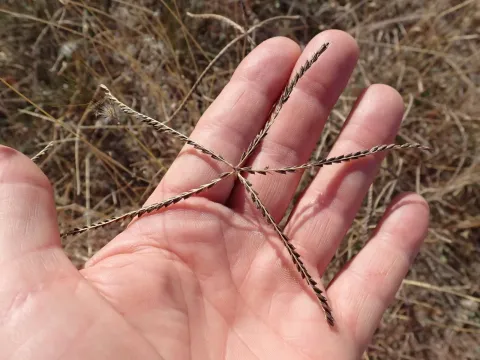
Chloris ventricosa
Chloris ventricosa
Chloris ventricosa seeds are best sown during periods with favorable temperature conditions, typically corresponding to late spring or early summer. Ensuring sufficient soil moisture in the first few weeks after sowing is crucial for the successful germination of these small seeds.
What the section contains
Chloris ventricosa
The seeding rate depends on the cultivation method and the intended use, whether it is for establishing permanent pastures or reclaiming degraded lands. The optimal sowing depth should be no more than one to two centimeters to avoid hindering the emergence of seedlings.
To accelerate germination and increase field emergence, it is recommended to scarify the seeds or store them under controlled humidity conditions. Using high-quality seed material is a prerequisite for forming a uniform grass stand in the first year of the plant's life.
Sowing can be performed via drilling or broadcast seeding, followed by compulsory rolling. This promotes better contact between seeds and soil particles, preventing them from being blown away by wind or washed away by rainfall.
Once seedlings emerge, it is necessary to minimize competition from weed vegetation. Regular monitoring of the site during early developmental stages allows for timely measures to protect young Chloris shoots from shading and nutrient deficiency.
Chloris ventricosa belongs to the grass family and prefers open, well-lit areas. This plant demonstrates high resistance to arid conditions, making it a promising candidate for cultivation in regions with limited rainfall.
The crop is moderately demanding regarding soil composition, yet it thrives best on light, well-drained sandy or loamy soils. It is capable of tolerating temporary salinity, which expands its range of potential use in challenging ecological conditions.
Optimal temperatures for the active growing season range from 20 to 30 degrees Celsius. Chloris is not a frost-tolerant crop; therefore, its cultivation is restricted to areas with mild climates or treated as an annual forage crop in colder regions.
Agronomic requirements include regular application of nitrogen fertilizers to stimulate green mass production. The plant responds well to periodic loosening of inter-row spaces, which improves root system aeration and prevents soil compaction.
The crop tolerates livestock trampling very well, making it an ideal component for creating durable pastures. Its root system has the ability to bind surface soil layers, effectively preventing erosion processes on sloping terrains.
The green mass yield of Chloris ventricosa directly depends on moisture levels and the intensity of mineral nutrition. Under favorable conditions, the plant is capable of providing multiple cuts within a single growing season.
Average productivity indicators allow this grass to be used as a significant source of hay in arid regions. The nutritional value of the plant remains high when harvested before the stem hardening stage and spike formation.
To maintain consistently high yields, it is recommended to rejuvenate the grass stand through overseeding or organic fertilizer application. Excessive grazing can lead to slower regrowth, so maintaining a rotational grazing schedule is essential.
Chloris ventricosa is also valued for its stable seed production, with seeds retaining viability for several years. Harvesting of seed material is conducted mechanically during the mass ripening phase of the spikes.
The economic efficiency of growing this crop increases with integrated usage, where pasture grazing is alternated with hay harvesting. This allows for maximizing the plant's productivity potential under variable climate conditions.
The main threats to Chloris ventricosa include fungal infections in high-humidity conditions. Foliar diseases, such as rust, can significantly reduce the quality of forage mass and total harvest volume if agronomic practices are neglected.
Pests affecting grass crops, including aphids and certain types of weevils, can cause localized damage to the stands. Regular plant inspection allows for early detection of infestation hotspots and the implementation of localized treatments.
Competition from invasive weed species can suppress Chloris growth during early stages. It is important to perform timely weed control, especially during the intense tillering phase, when the plant is most vulnerable.
Improper irrigation regimes leading to water stagnation trigger root rot development. A well-designed drainage system is an effective preventive method against most soil-borne pathogens.
- Cereal rust (Puccinia spp.)
- Common aphid (Aphididae)
- Root rots (Fusarium)
- Cutworm larvae
- Nematode infestation
Harvesting Chloris ventricosa for hay is conducted at the early flowering stage, when nutrient concentrations in the leaves reach their peak. Delaying the cut leads to a rapid decline in fiber digestibility for livestock.
For high-quality drying, the mown mass is left in windrows for several days and turned periodically. The use of tedders allows for even moisture distribution and prevents the rotting of the bottom layers of the hay.
In intensive farming operations, harvesting is often combined with baling for ease of storage and transportation. Properly dried Chloris hay can be stored for long periods, provided it is protected from precipitation.
When used as a pasture crop, harvesting is carried out directly by livestock. Adjusting grazing pressure helps maintain the stand in the optimal growth phase and prevents the grass from over-maturing.
Harvesting equipment should be calibrated for a low cut to effectively remove old residues and promote rapid regrowth of the aftermath. Careful management ensures the longevity of the stand and preserves turf density.