
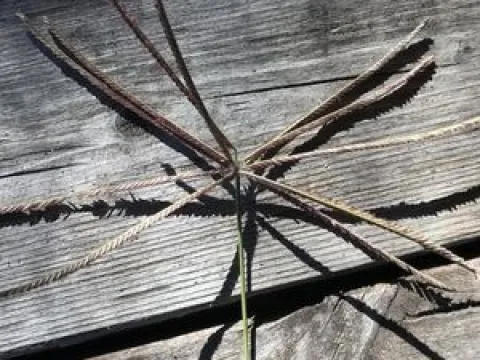
Chloris submutica
Chloris submutica
Chloris submutica is a perennial grass species belonging to the Poaceae family. Originating from arid and semi-arid regions of the Americas, this plant is well-adapted to extreme environmental conditions, characterized by its remarkable ability to withstand prolonged drought.
What the section contains
Chloris submutica
The botanical structure of Chloris submutica includes a deep and fibrous root system, which allows the plant to extract moisture from significant soil depths. This anatomical feature provides the species with a distinct advantage in sandy or gravelly soils where water retention is typically low.
Regarding climate requirements, the crop thrives in warm, sunny environments with moderate to high temperatures. It is highly valued for its tolerance to saline soil conditions, making it an excellent candidate for agricultural land rehabilitation in regions where soil salinity limits the growth of traditional forage crops.
Cultivation of Chloris submutica requires minimal intervention once established. The plant is known for its vigorous growth and rapid recovery after grazing or harvesting, which ensures a sustainable supply of biomass throughout the growing season.
In terms of agricultural utility, this species is primarily utilized as a forage crop. Its leaves are highly palatable to livestock, providing a valuable source of nutrients. Furthermore, its ability to act as a soil cover makes it effective for preventing wind and water erosion.
While Chloris submutica is naturally resistant to many common grass pathogens, it is not entirely immune to threats. In humid environments, the plant may become susceptible to fungal leaf spot diseases that can compromise the nutritional quality of the forage.
Pest pressure is generally low, but certain sap-sucking insects, such as aphids, can colonize the foliage during rapid growth phases. These pests can transmit viral infections that may reduce the overall vitality and biomass production of the sward.
Effective management against threats involves implementing proper grazing rotations. Avoiding overgrazing is crucial, as it stresses the root system and weakens the plant, making it more susceptible to opportunistic diseases and competitive weed encroachment.
Weed control is primarily needed during the establishment phase. Once the plant has developed a strong root system, it acts as a robust competitor against most weeds. However, initial competition must be managed to ensure a uniform and productive stand.
Periodic agricultural monitoring should focus on early signs of stress or pest colonization. Early intervention, including adjustment of irrigation schedules or selective biological control measures, is often sufficient to maintain high crop productivity without extensive chemical application.