
Rescue grass
Bromus catharticus Vahl var. rupestris (Speg.) Planchuelo & P. M. Peterson
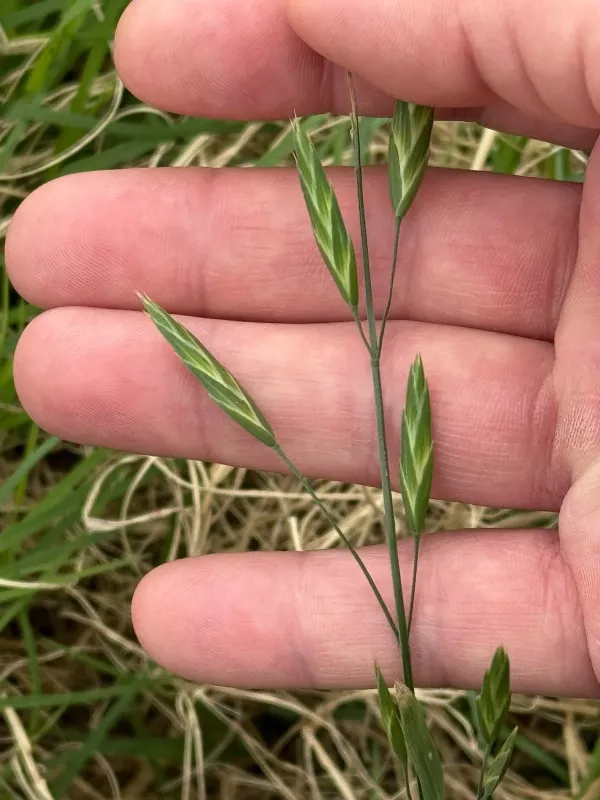
Description
Sowing dates
Rescue grass (Bromus catharticus) is typically sown in early spring when the soil temperature consistently reaches 5–10 degrees Celsius.
In regions with milder winters, autumn sowing is also a viable option to ensure early germination and vigorous growth at the start of the spring season.
The recommended seeding rate is between 15 and 25 kg per hectare, depending on whether it is sown in a pure stand or as part of a forage mixture.
It is essential to plant seeds at a shallow depth of approximately 2 cm to ensure high emergence rates and to avoid burying the seeds too deep.
A light harrowing or rolling after sowing helps maintain soil-to-seed contact, which is crucial for quick establishment of the young grass plants.
Growing requirements
This species belongs to the Poaceae family and thrives in well-drained, fertile soils with a neutral pH level, ranging from 6.0 to 7.5.
Rescue grass requires adequate moisture levels, particularly during the establishment phase and the main growth periods in spring and early summer.
While it shows moderate drought tolerance, high-yielding crops benefit significantly from timely irrigation or supplemental watering during dry spells.
The plant is highly responsive to nitrogen fertilization, which promotes rapid biomass production and enhances the overall nutritional quality of the forage.
Optimal growth occurs in cool to moderate temperature ranges, making it an excellent cool-season forage grass in various agricultural climates.
Yield
Under optimal management practices and adequate fertilization, rescue grass can produce impressive yields, reaching up to 40 tons of green mass per hectare.
The forage quality is high, particularly when harvested at the vegetative stage, providing excellent energy and protein content for livestock feeding.
Its ability to regrow quickly after cutting allows for multiple harvests throughout the growing season, maximizing the total biomass output from the field.
In seed production systems, yields can be very substantial, making it a profitable crop for farmers focusing on agricultural seed multiplication.
Regular monitoring of soil nutrient levels is vital to maintaining these high yield potentials over multiple years of production.
Main diseases and pests
Common fungal diseases such as rust and powdery mildew can affect rescue grass, particularly in high-humidity environments or dense stands.
Root rot diseases are more prevalent in poorly drained soils, often leading to reduced plant density and weaker stands over time.
Insect pests, including various types of stem-boring flies and aphids, can cause significant damage if populations reach high levels during the spring growth.
Integrated pest management strategies, such as maintaining optimal stand density and using resistant cultivars, are highly effective in mitigating these threats.
Timely chemical applications should be used as a last resort, always adhering to safety guidelines and respecting pre-harvest intervals for forage crops.
Harvesting
The timing of the harvest is critical; for the best quality hay or silage, mowing should occur at the onset of the heading stage.
Waiting too long to harvest results in increased fiber content and decreased digestibility, which negatively impacts the nutritional value of the final product.
Mechanical harvesting should be carried out during periods of low humidity to ensure that the biomass dries evenly, preventing mold development in storage.
For seed collection, the crop should be harvested when the seeds are fully developed and change color, typically before widespread shattering occurs.
Following the final harvest of the season, cleaning the fields of debris helps prepare the crop for the next growth cycle and reduces disease pressure.