
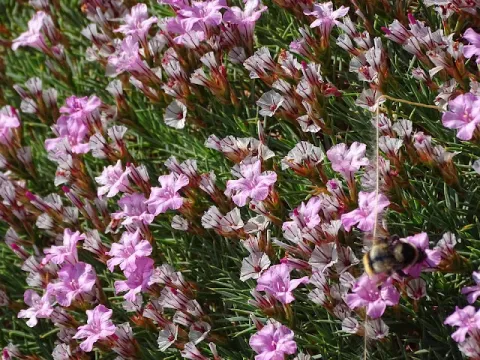
Acantholimon kotschyi
Acantholimon kotschyi
Sowing Acantholimon kotschyi seeds is best performed during late autumn or early spring, strictly following a cold stratification period to break seed dormancy.
What the section contains
Acantholimon kotschyi
The growing medium must be highly porous, consisting mainly of horticultural grit and coarse sand to prevent any possibility of water logging.
Seeds should be sown very shallowly, as they require significant light exposure to initiate the germination process successfully.
Patience is required as germination can be erratic and slow; maintaining consistent, light moisture levels without saturating the substrate is crucial.
Transplanting seedlings requires extreme care due to the taproot, which is highly sensitive to disturbance and can cause plant failure if damaged.
Acantholimon kotschyi belongs to the Plumbaginaceae family and is recognized for its dense, cushion-forming habit adapted to high-altitude rocky slopes.
Full sun exposure is a mandatory requirement for this plant to maintain its compact, hemispherical structure and to encourage prolific flowering.
The soil should be infertile, mineral-rich, and characterized by excellent drainage; heavy clay soils are unsuitable and will lead to rapid root decline.
Agrotechnical management must include protective measures against winter moisture, such as glass cloches, to prevent the crown from rotting.
As a true xerophyte, the plant thrives in arid conditions and requires minimal supplemental irrigation once fully established in the rock garden.
Root rot is the most significant threat to Acantholimon kotschyi, typically caused by stagnant water around the root collar in the winter months.
Powdery mildew may occur if air circulation is insufficient, necessitating the removal of dead foliage from the center of the dense cushion.
Spider mites are common pests in hot, dry climates, which can discolor the rigid, spine-tipped leaves and diminish the plant's aesthetic value.
Effective pest management involves maintaining optimal airflow around the plant and applying appropriate acaricides only when infestation is observed.
Preventative cultural practices include ensuring the plant is positioned on a slope or a raised bed to facilitate rapid water runoff away from the base.