
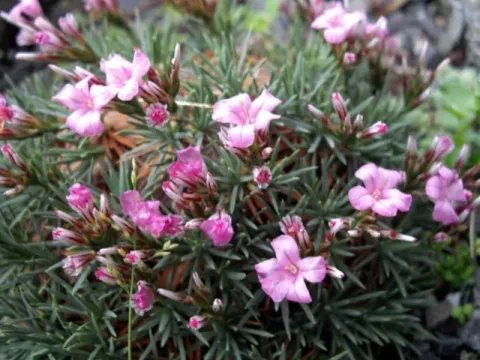
Acantholimon acerosum
Acantholimon acerosum
Sowing seeds of Acantholimon acerosum is typically performed in late autumn or early spring after a necessary stratification period of one to two months.
What the section contains
Acantholimon acerosum
Seeds should be sown in a light, well-draining substrate, barely covering them, as the germination process requires sufficient exposure to indirect light.
Maintaining moderate soil moisture during the germination phase is critical, but it is equally important to avoid waterlogging, which is fatal for seedlings.
Seedlings should be transplanted with extreme caution, as the plant develops a deep taproot that is highly sensitive to root disturbance and relocation.
The optimal time for transplanting established seedlings to their permanent garden location is during the spring, once the danger of late frost has completely passed.
Acantholimon acerosum is a member of the Plumbaginaceae family, recognized for its dense, cushion-forming, evergreen habit which is prized in rock gardens.
The species requires full sun exposure to maintain its compact shape; any degree of shade will cause the plant to become leggy and lose its characteristic form.
It prefers nutrient-poor, rocky soils with a neutral to slightly alkaline pH, mimicking the harsh environmental conditions of its native mountainous habitats.
Exceptional drainage is non-negotiable, as stagnant water near the root crown quickly leads to rot, often causing the sudden death of the entire cushion.
This plant is highly drought-tolerant, making it an excellent candidate for xeriscaping and areas with limited irrigation where other garden plants struggle to survive.
Excessive moisture is the primary threat to the health of Acantholimon acerosum, frequently leading to root rot and crown decay in poorly drained soils.
High humidity levels can encourage fungal infections and leaf spots, so ensuring adequate airflow around the plant cushion is vital for disease prevention.
Occasional infestations of spider mites or aphids may occur, particularly during prolonged periods of drought when the plant's natural vigor may be diminished.
Preventative care involves placing gravel or grit around the crown of the plant, which keeps the base dry and prevents foliage from touching damp soil.
If disease symptoms appear, it is essential to remove the affected parts promptly and apply appropriate systemic fungicides to save the plant from further degradation.