
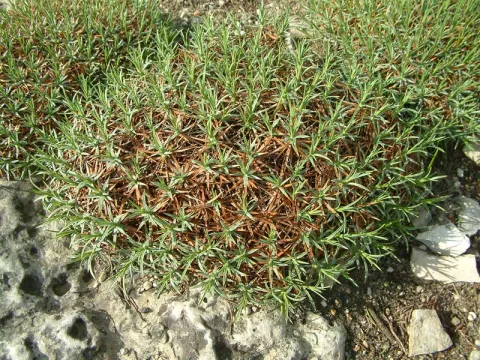
Acantholimon diapensioides
Acantholimon diapensioides
Acantholimon diapensioides is a distinctive member of the Plumbaginaceae family, native to the rugged mountainous terrains of Central Asia. It is a cushion-forming perennial known for its slow growth rate and high adaptability to harsh environmental conditions.
What the section contains
Acantholimon diapensioides
The plant thrives in well-draining, mineral-rich, stony soils. It is essential to ensure that the planting site has excellent drainage, as the species is highly susceptible to root damage caused by prolonged exposure to stagnant water.
Sunlight is the most critical environmental factor. Acantholimon requires full sun throughout the day to maintain its dense, symmetrical cushion form. Any shade will cause the foliage to lose its compactness, resulting in an unhealthy appearance.
Regarding cultivation, it is considered a xerophytic plant. It requires minimal irrigation, primarily during the early stages of establishment. Once the root system is well-developed, it can withstand significant drought periods without supplemental watering.
Propagation is generally performed via seeds or semi-hardwood cuttings. Given its slow growth, it is a perfect candidate for containers or alpine troughs where soil conditions can be strictly controlled to prevent excessive nutrient and moisture levels.
The primary threat to Acantholimon diapensioides is crown rot, triggered by poor air circulation and excessive moisture in the root zone. Rot often occurs during the winter months if the plants are not adequately protected from snowmelt or winter rain.
Pests are generally not a major concern when the plant is grown in its preferred open, airy conditions. However, in enclosed greenhouse environments, spider mites can occasionally infest the inner parts of the cushion where air movement is minimal.
Weed competition is another significant threat. Because the plant is slow-growing, it can be easily overtaken by aggressive weeds that trap moisture around its base, creating an ideal microclimate for pathogens.
To mitigate disease risk, growers often place a layer of clean grit or gravel around the base of the plant. This prevents the foliage from making direct contact with soil moisture and facilitates rapid drying after precipitation.
If disease symptoms such as browning or mushy stems appear, the affected area should be excised carefully, and the surrounding environment adjusted to increase ventilation. Fungicidal treatment should be used as a last resort during the growing season.