
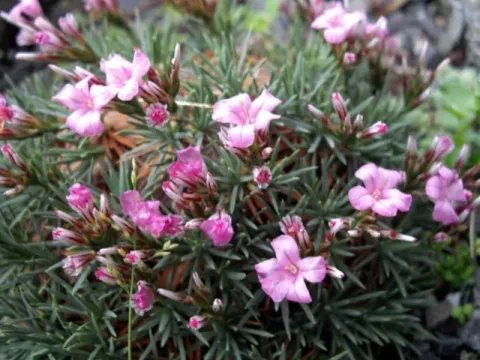
Acantholimon olivieri
Acantholimon olivieri
Acantholimon olivieri, a member of the Plumbaginaceae family, is a slow-growing perennial best suited for rock gardens. Propagation is primarily done via seeds, which require a cold stratification period of several weeks to break dormancy.
What the section contains
Acantholimon olivieri
Seeds should be sown in a well-draining, mineral-rich substrate in late autumn or early spring. Maintaining a consistent but light moisture level is crucial until germination occurs, as overly wet soil can lead to damping-off disease.
Once seedlings have developed their first true leaves, they should be carefully pricked out into individual pots. Due to their sensitive taproot system, they must be handled with extreme care to avoid damage that could stunt their growth.
Transplanting into the permanent garden location is best done in late spring once the danger of severe frost has passed. Planting on a slight slope or in raised beds can significantly improve survival rates by preventing water accumulation.
Establishing the plant takes time, as it focuses on developing a deep root system before forming its characteristic dense, cushion-like foliage. During the first year, patience is key while the plant settles into its new environment.
The primary requirement for success with Acantholimon olivieri is full sun exposure. It thrives in locations where it receives direct sunlight for the majority of the day, reflecting its natural high-altitude habitat.
Soil quality must be lean and exceptionally well-drained. A mix of sand, gravel, and stone chippings is ideal. Heavy, moisture-retentive clays are unsuitable and will almost certainly cause the plant to perish.
This species is highly drought-tolerant once established, requiring little to no supplemental irrigation. It is well-adapted to the harsh conditions of its native Asian highlands, including strong winds and wide temperature ranges.
Fertilization is generally unnecessary and potentially harmful. Excessive nutrients encourage rapid, weak growth that makes the plant more susceptible to diseases and diminishes its natural compact form.
Maintaining good air circulation around the plant is essential. Placing it in an open area rather than a crowded border helps prevent the accumulation of moisture within its dense foliage.
Root rot is the most significant threat to Acantholimon olivieri. It is caused by poor drainage or excessive soil moisture, particularly during the dormant winter months when the plant cannot process excess water.
To mitigate the risk of fungal infections, use a top dressing of grit or small stones around the collar of the plant. This keeps the foliage away from the damp soil and promotes quick evaporation after rain.
Pests are rarely a major issue for this plant due to its rigid, spinose leaves. However, during periods of extreme heat and drought, inspect the foliage periodically for signs of spider mites, which can sometimes colonize the dry interiors of the cushions.
Routine inspections are the best defense. If a section of the cushion begins to brown or soften unexpectedly, examine the roots immediately to assess if the soil is too wet or if the drainage has become compromised.
Providing the plant with its preferred grit-heavy, sunny environment is the most effective way to prevent disease. If conditions are met, Acantholimon olivieri remains a robust and long-lived garden feature.