
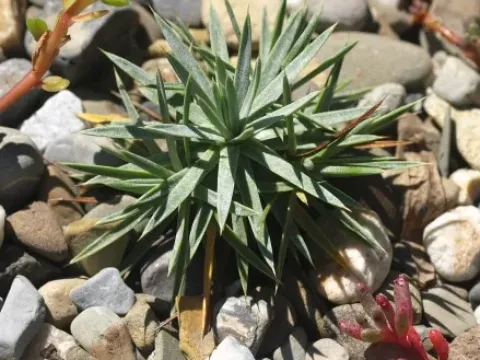
Acantholimon caryophyllaceum
Acantholimon caryophyllaceum
Acantholimon caryophyllaceum is a distinctive member of the Plumbaginaceae family, prized for its dense, cushion-forming habit and sharp, spiny foliage that resembles cloves.
What the section contains
Acantholimon caryophyllaceum
Propagation is generally performed through seeds, which require a cold stratification period to break dormancy and ensure consistent germination rates in spring.
Seeds should be sown in a well-draining, grit-heavy medium, maintaining shallow depth to allow light exposure, which is essential for the activation of embryo growth.
Growth of the seedlings is notoriously slow, necessitating careful handling and patience while the plant establishes its complex root structure typical of mountain flora.
Transplanting into the permanent location should occur only when the plant is sufficiently robust, ideally during the early spring before the intense summer heat sets in.
The plant thrives in conditions that mimic high-altitude environments, requiring maximum sun exposure throughout the entire day to maintain its compact, healthy form.
Soil composition must be extremely porous, consisting primarily of mineral components such as sand, limestone chippings, and gravel to prevent moisture retention.
Nutrient-rich soils are actually detrimental to this species; it prefers lean substrates where it does not have to compete with more aggressive vegetation.
Watering requirements are minimal, as the plant is highly adapted to arid conditions; even during hot spells, it requires only infrequent and deep irrigation.
Good air circulation is vital; the cushion structure must remain dry, as trapped humidity can lead to rapid deterioration of the foliage and root systems.
Fungal pathogens represent the primary threat to the health of Acantholimon, particularly in humid climates where stagnant air allows diseases to take hold.
Root rot is the most common cause of plant failure, usually triggered by waterlogged conditions that occur when the planting medium lacks proper drainage.
While the plant is quite hardy, it can occasionally be attacked by spider mites during prolonged heatwaves, which may affect the vitality of the foliage.
Preventative measures include placing a layer of clean, coarse gravel beneath the leaves to separate them from the soil, keeping the cushion base dry.
Monitoring for any signs of leaf discoloration or wilting is essential, as immediate removal of affected sections can prevent the spread of localized infections.